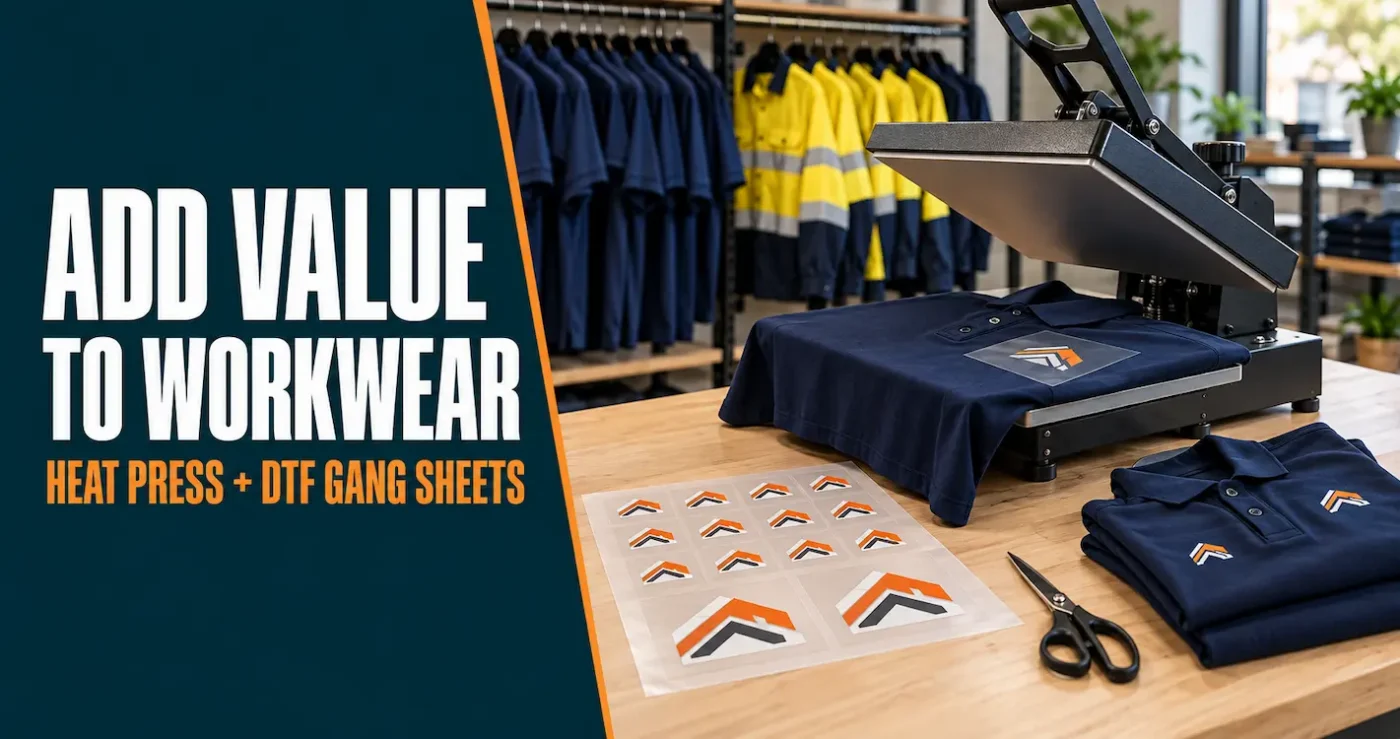
Your customers already come to you for workwear. A reliable heat press and outsourced DTF gang sheets can help you offer logo printing too. Explore the equipment, pricing and workflow needed to launch a uniform branding service, plus the important checks for hi-vis and protective clothing.
Author Archives: David Seth
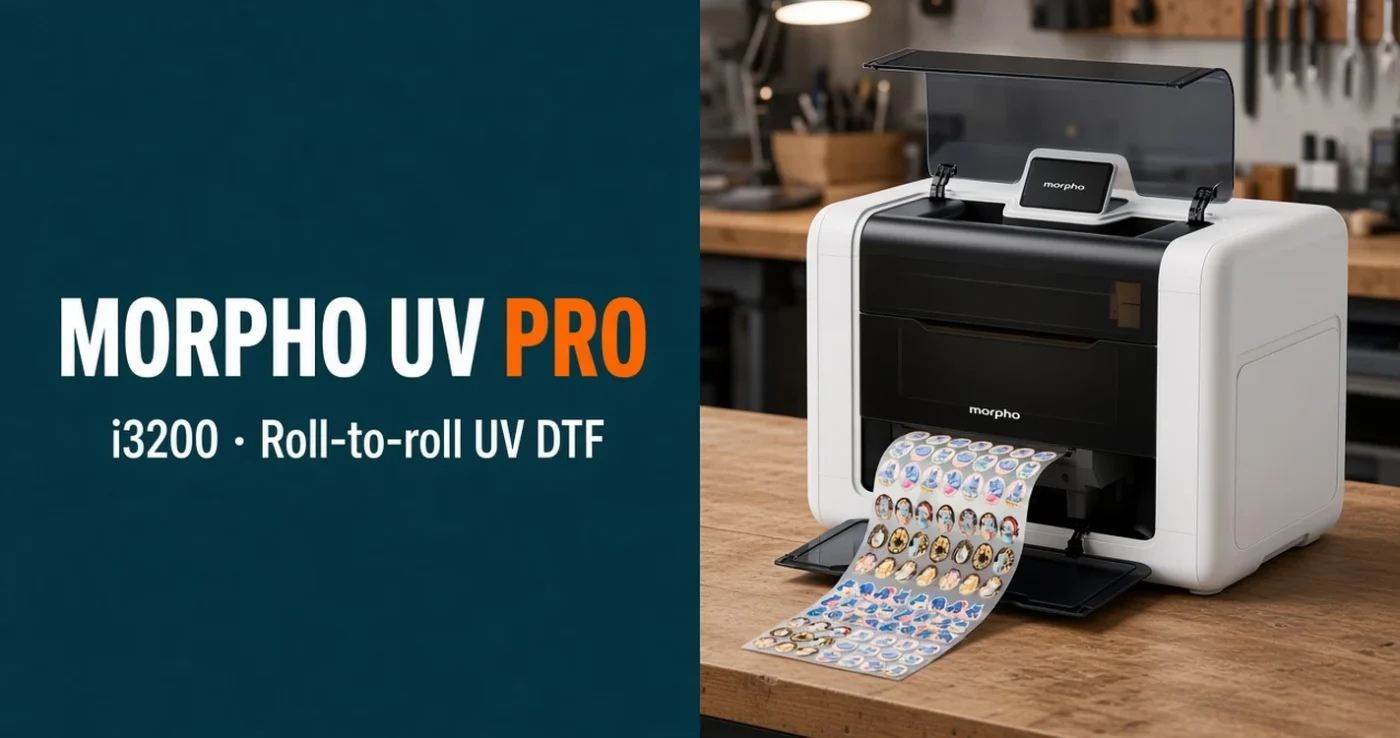
We’re planning to bring UV DTF sticker printing to our Coorparoo workshop with the Morpho UV Printer Pro. Discover why this compact printer caught our attention, what it could offer for branded products and personalised gifts, and what we’ll test before opening orders.
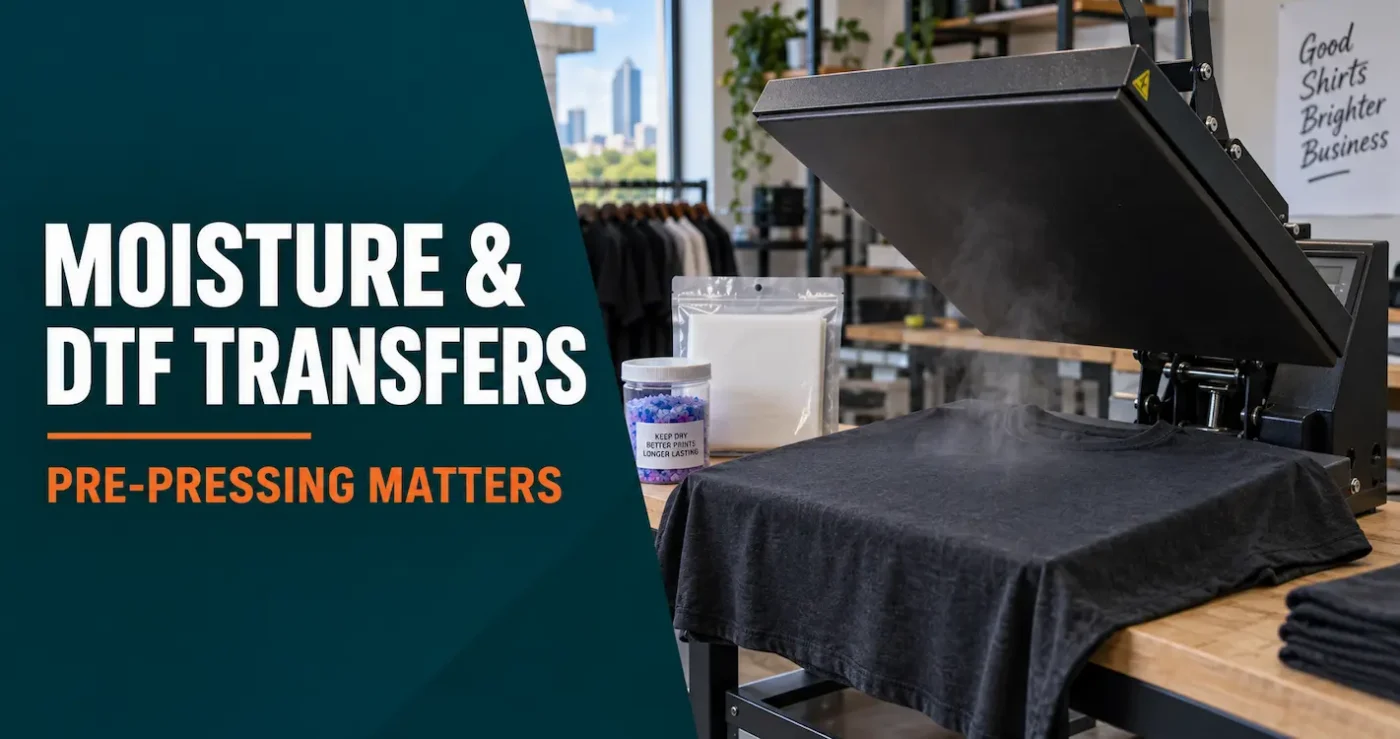
Pre-press every shirt before the transfer goes down. Cotton can feel dry and still throw steam when the platen closes, and that steam fights the adhesive. If you see steam, open the press and dry the fabric again. Moisture is a common reason a print lifts. It is not the only one. Check heat, time, and pressure as well.
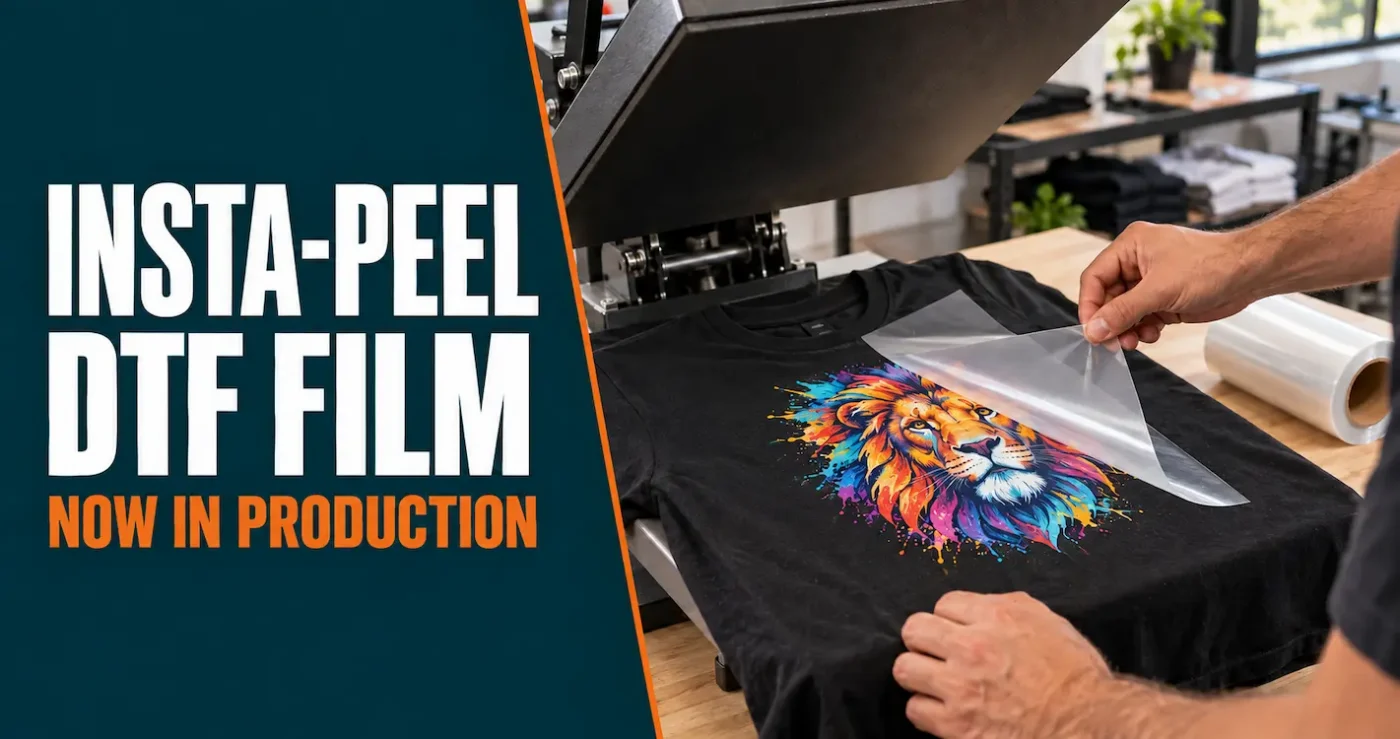
Insta-Peel is the film we now use for standard gang sheets and cut sheets. On cotton and most fabrics, press at 160°C for 8 seconds and peel the carrier as soon as the press opens. On polyester, press at 120°C for 30 seconds and cold peel only, then press again for 10 seconds at 120°C. It is not a household-iron product. Iron-on DTF is a separate range.
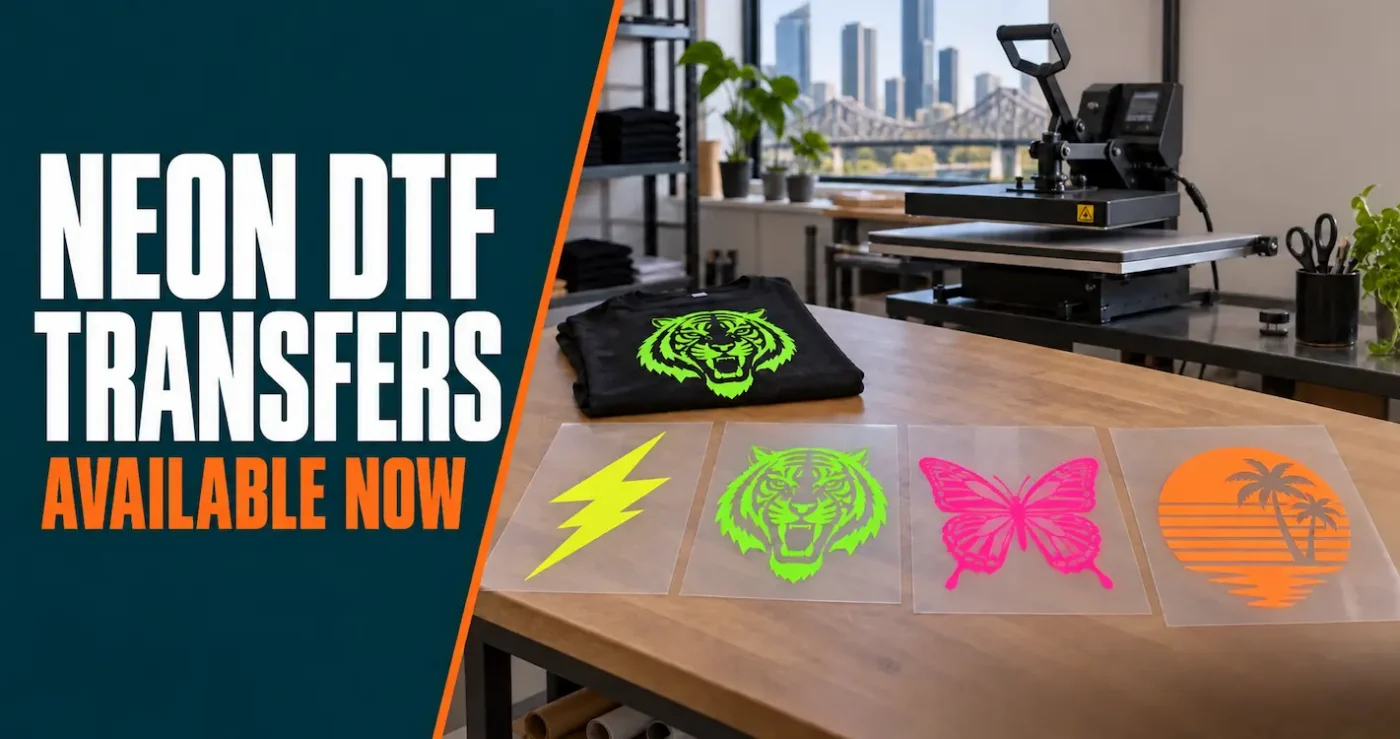
Neon DTF is a cold-peel cut sheet in yellow, green, pink, or orange. One colour per 280 × 390 mm sheet. It does not glow and it is not a gang sheet. Cotton and most fabrics: 160°C for 8 seconds, cool, then peel. Polyester: 120°C for 30 seconds, cold peel, then 10 seconds at 120°C. A household iron will not press it.
Customer complaints are easier to resolve when expectations, evidence and responsibilities are clear. This practical guide explains how we investigate DTF transfer concerns, communicate decisions and provide fair remedies without overlooking customer rights or staff safety.
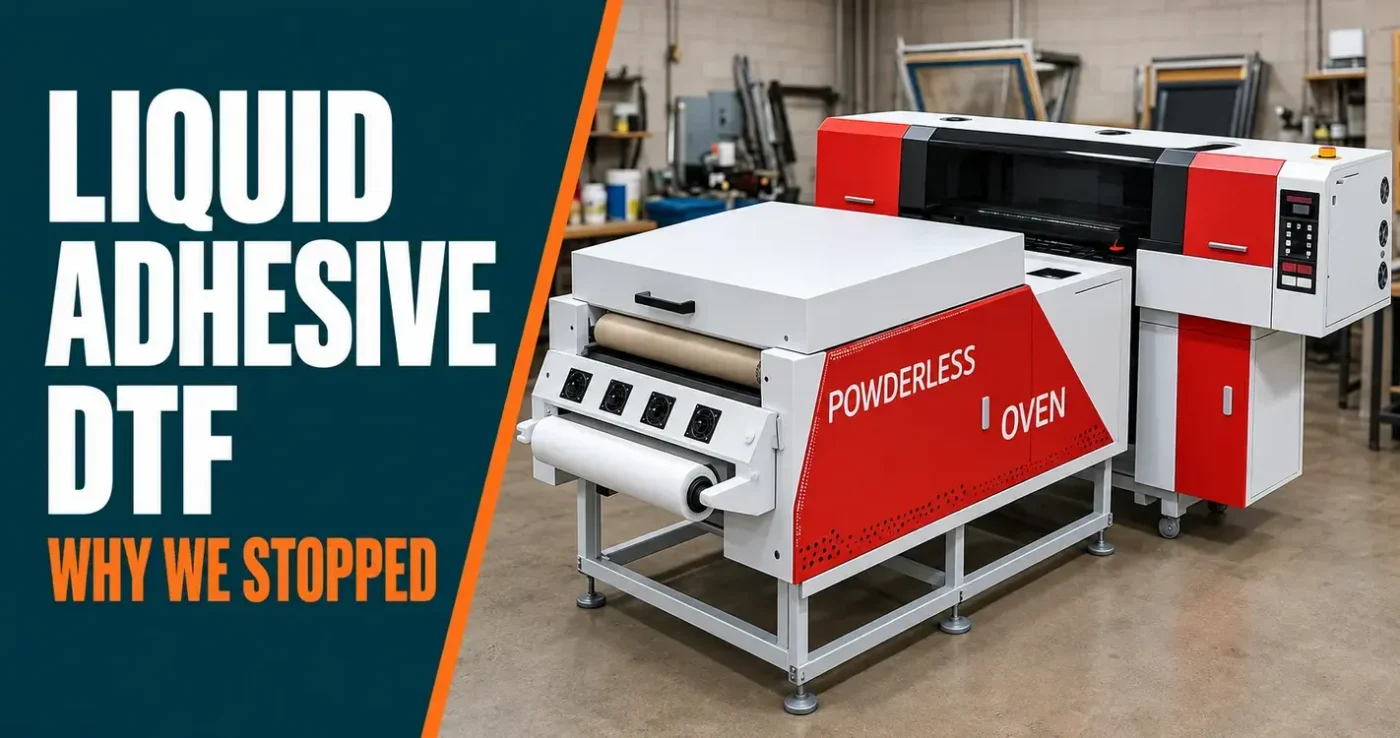
Liquid-adhesive DTF transfers promised softer prints and a cleaner workflow. After producing and selling them, we found the pressing, production and durability tolerances too narrow for reliable ready-to-press use.
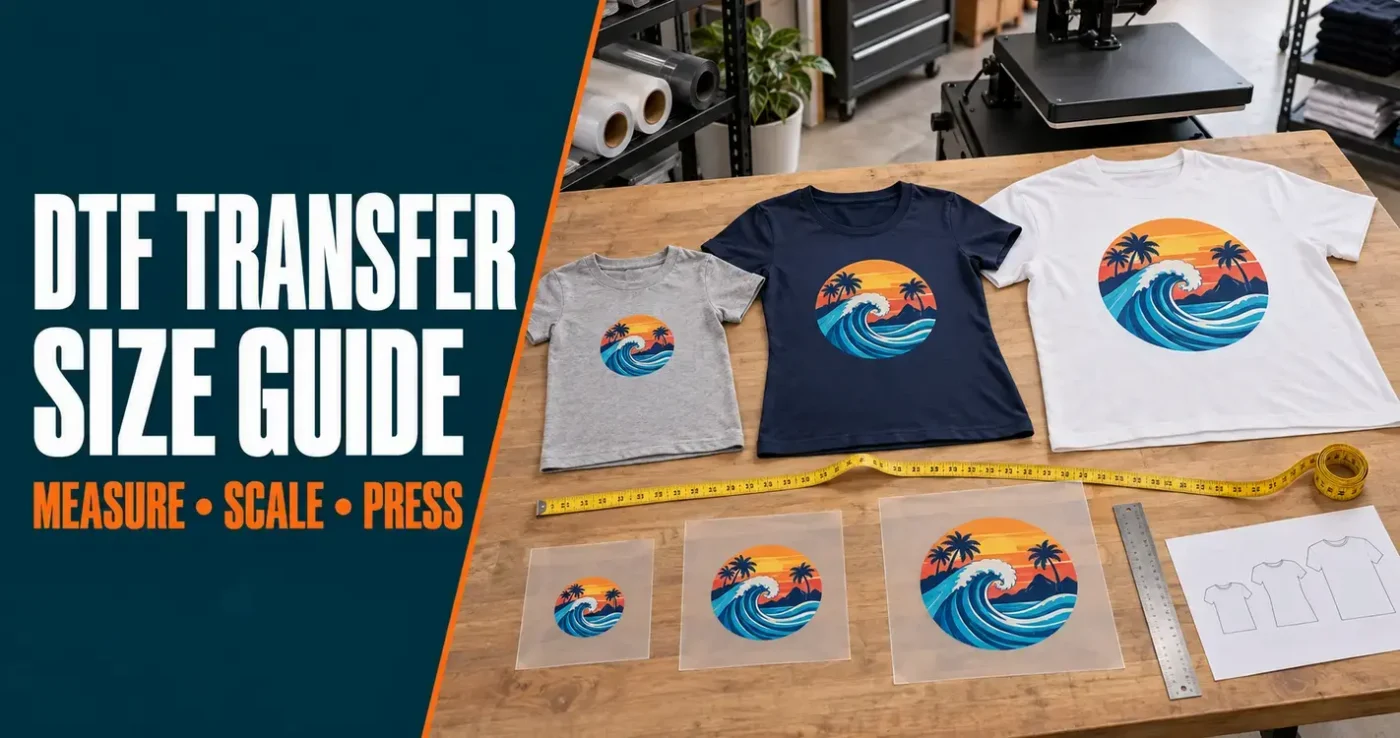
Learn how to choose and scale DTF transfer sizes for children’s, fitted and adult garments. Includes practical print-width charts, placement advice, resolution calculations and gang-sheet planning tips.
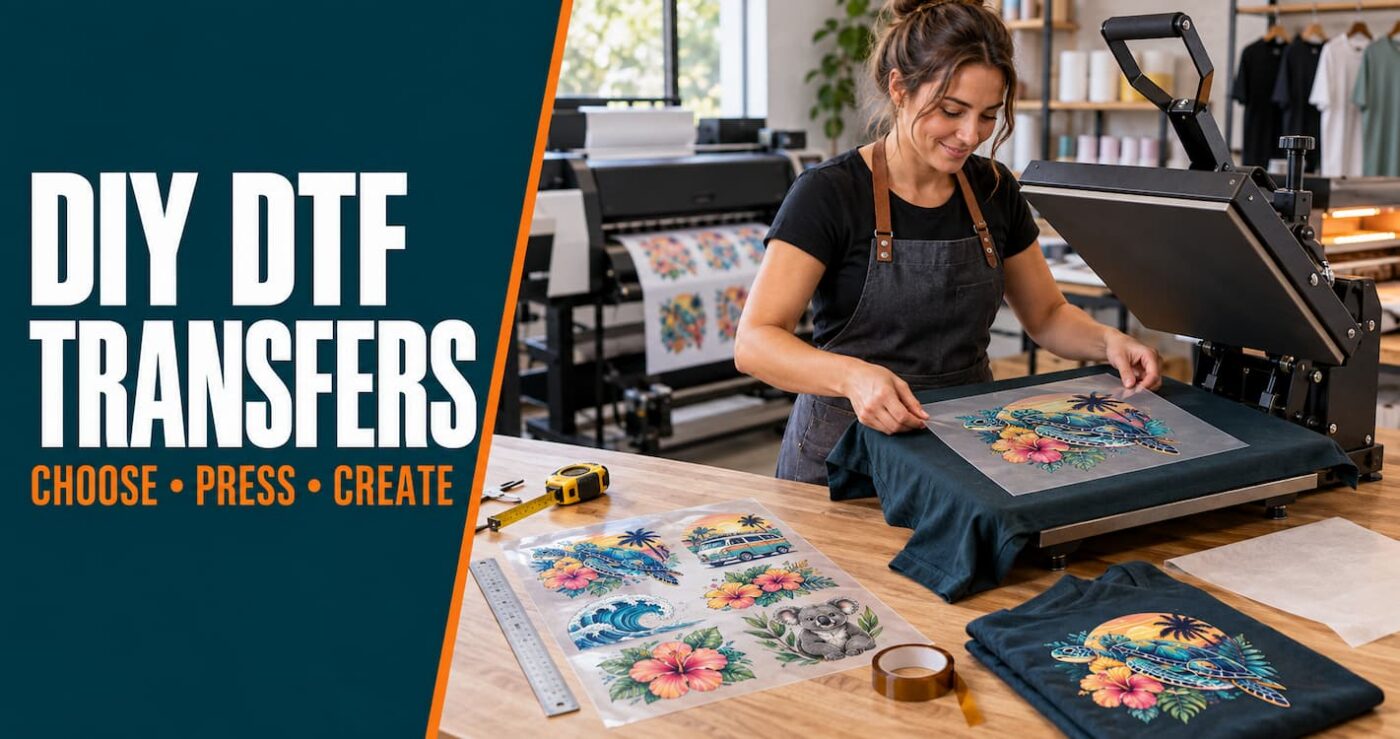
DIY DTF does not mean you have to buy a printer. Most people in Australia should order ready-to-press transfers and press them onto their own shirts. Use a heat press for standard film. A household iron is only for transfers labelled iron-on. A Cricut EasyPress is fine when the platen fully covers the design. Buy a printer later, if the orders are already there.
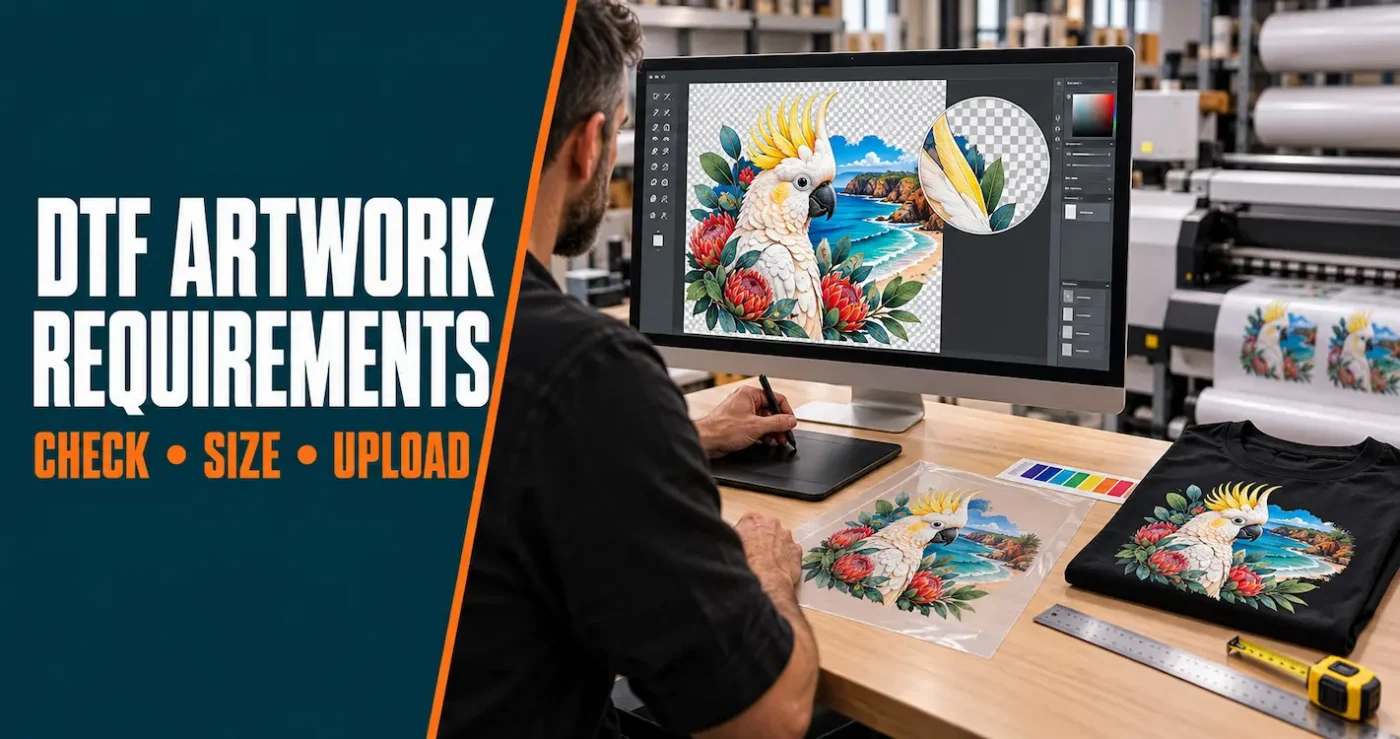
Prepare your artwork correctly before ordering DTF transfers. This practical guide covers PNG files, transparent backgrounds, 300 DPI resolution, print sizing, colour, fine details, halftones and common artwork problems.