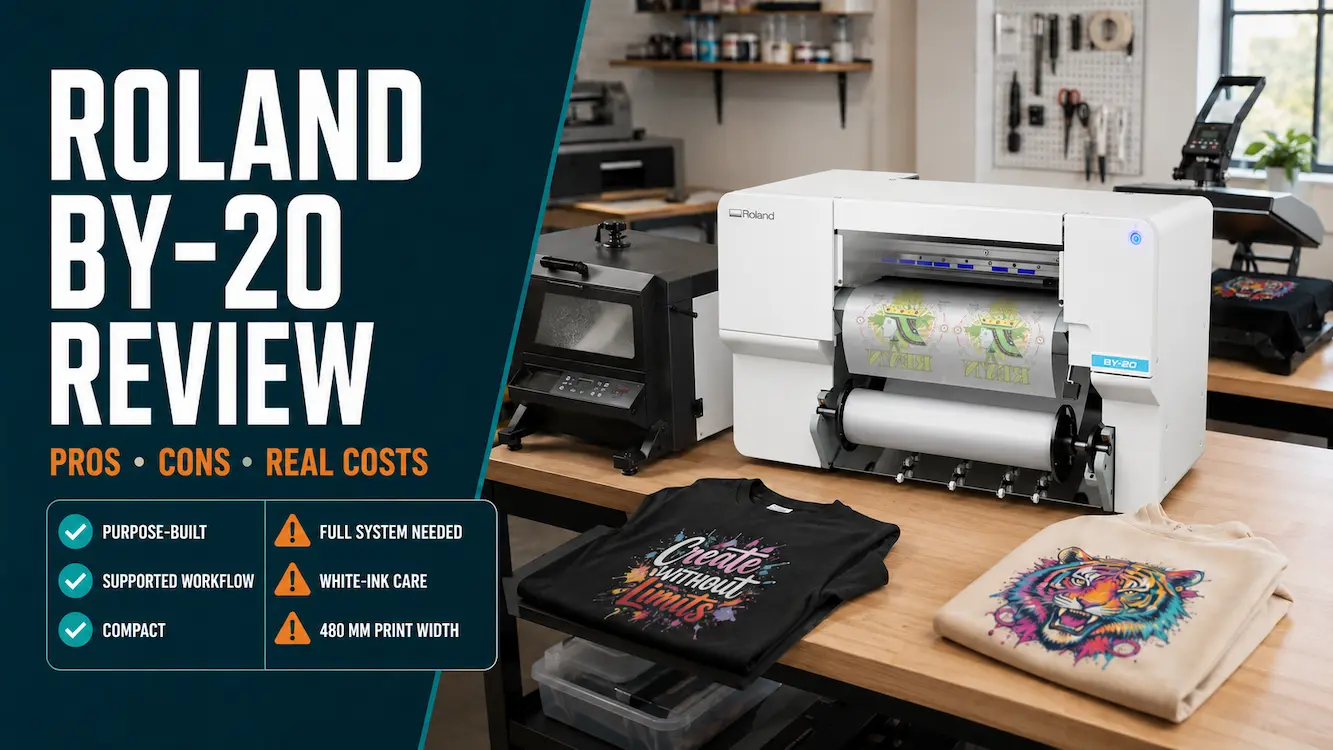
The Roland VersaSTUDIO BY-20 replaced the BN-20D as Roland DG Australia’s compact desktop DTF printer. It offers a purpose-built 20-inch system, integrated cutting, recognised software and local dealer support—but it still requires powder, curing, ventilation, maintenance and realistic production planning. This independent review examines the benefits and drawbacks before you buy.
Monthly Archives: June 2023
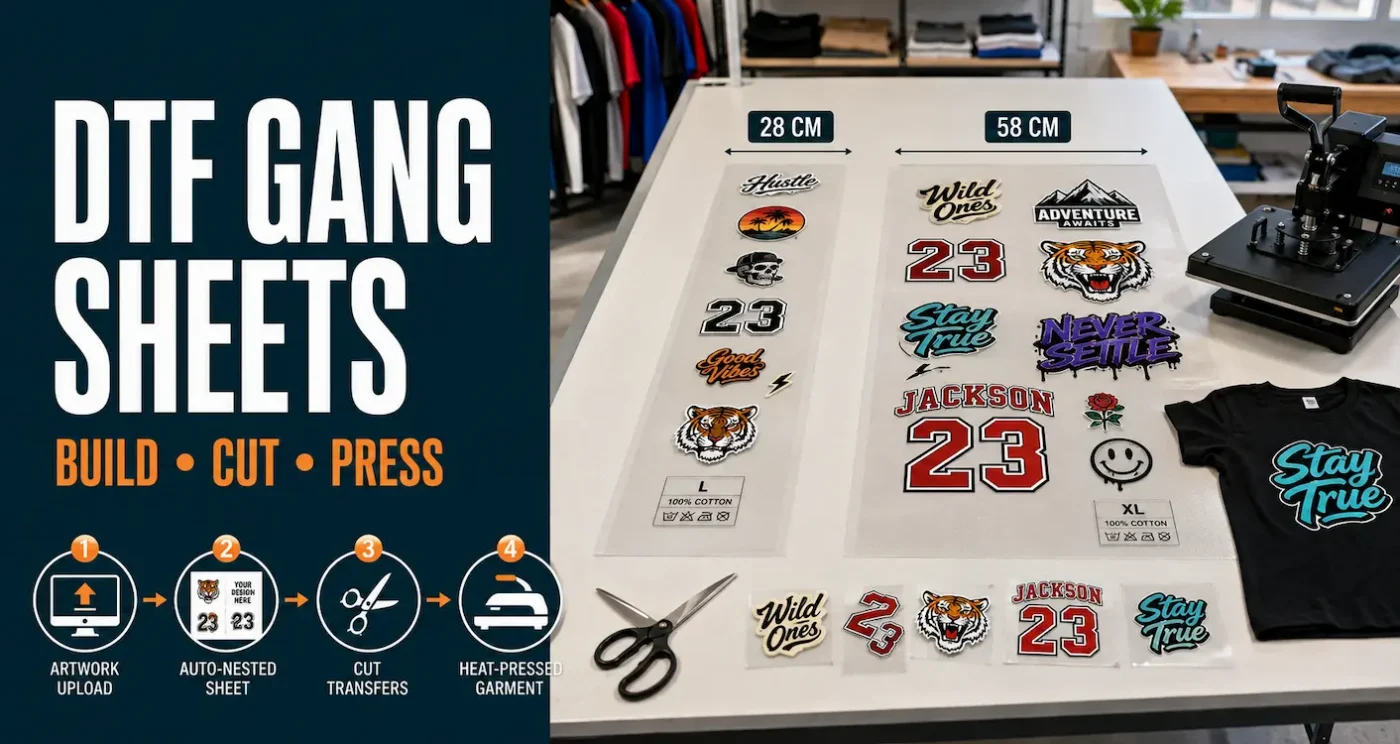
A well-planned gang sheet saves more than film. Learn how to choose 28 cm or 58 cm width, prepare artwork, use our online builder, check quantities and calculate transfer costs before pressing your garments.
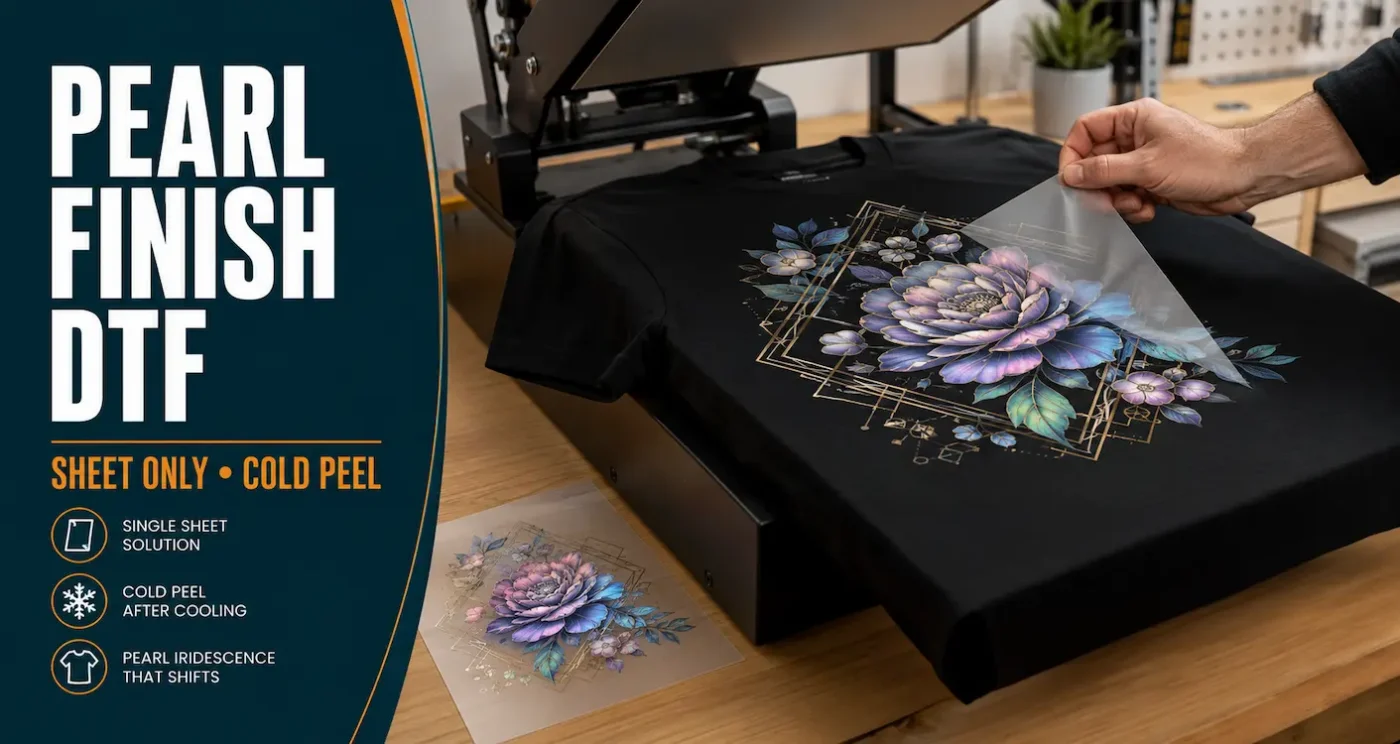
Pearl DTF is a full-colour print with a shifting sheen, sold as a cold-peel cut sheet. It is not a gang sheet. Cotton and most fabrics: 160°C for 8 seconds, cool completely, then peel. Polyester: 120°C for 30 seconds, cold peel, then 10 seconds at 120°C. A screen mock-up will not match the sheen. Press a test first.
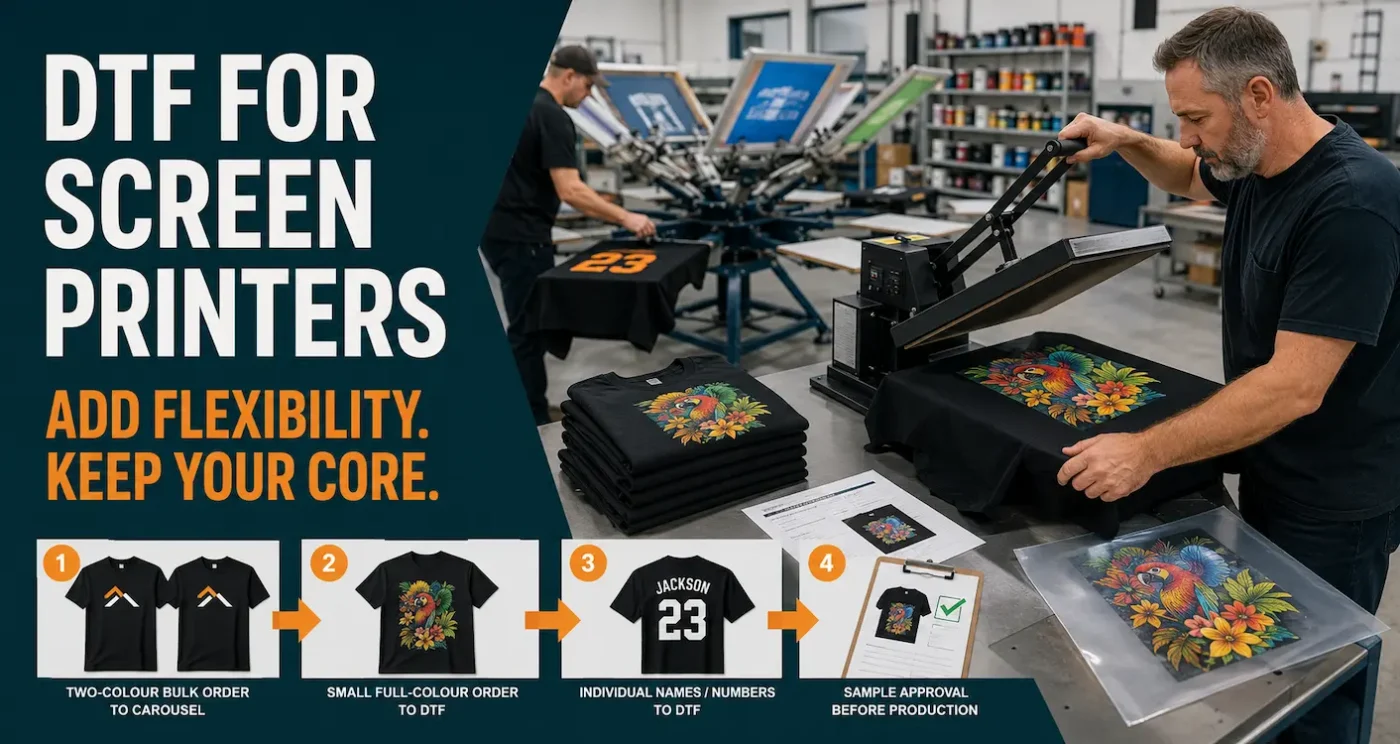
DTF does not need to replace screen printing. Ready-to-press transfers can help established printers accept short runs, full-colour artwork, samples, names and specialty jobs without adding screens or operating another print line. This practical guide explains where DTF fits, where screen printing remains stronger and how to introduce it successfully.
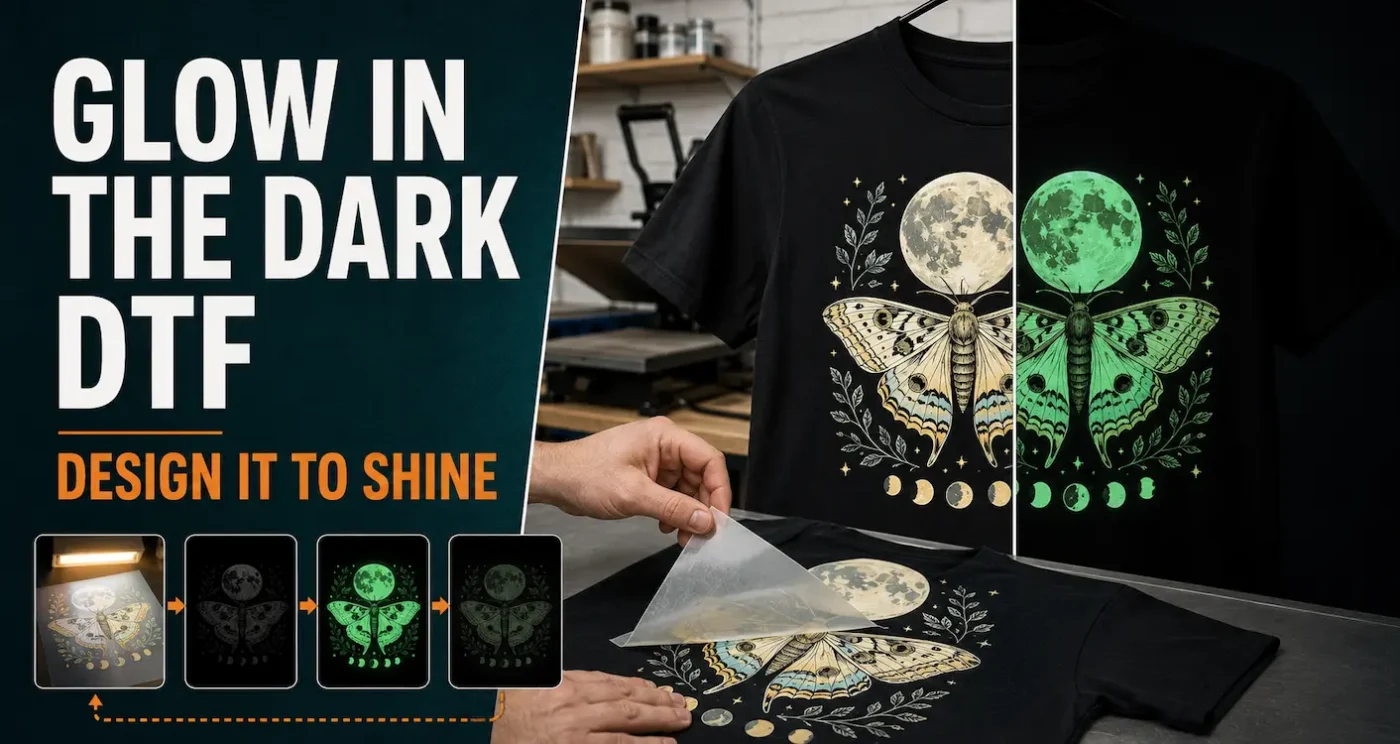
Glow-in-the-dark DTF is a cold-peel cut sheet. Light colours charge and show in the dark. Black and navy barely glow. It is not a gang sheet and it is not safety clothing. Press cotton and most fabrics at 160°C for 8 seconds, firm, let it cool, then peel. Polyester is 120°C for 30 seconds, cold peel, then 10 seconds at 120°C. A household iron will not press it.