
Social media can turn a niche aesthetic, joke or community reference into a T-shirt trend almost overnight—but likes do not guarantee sales. This 2026 guide explains how TikTok, Instagram, Pinterest and online marketplaces shape demand, which design signals are emerging and how to test ideas before investing in stock.
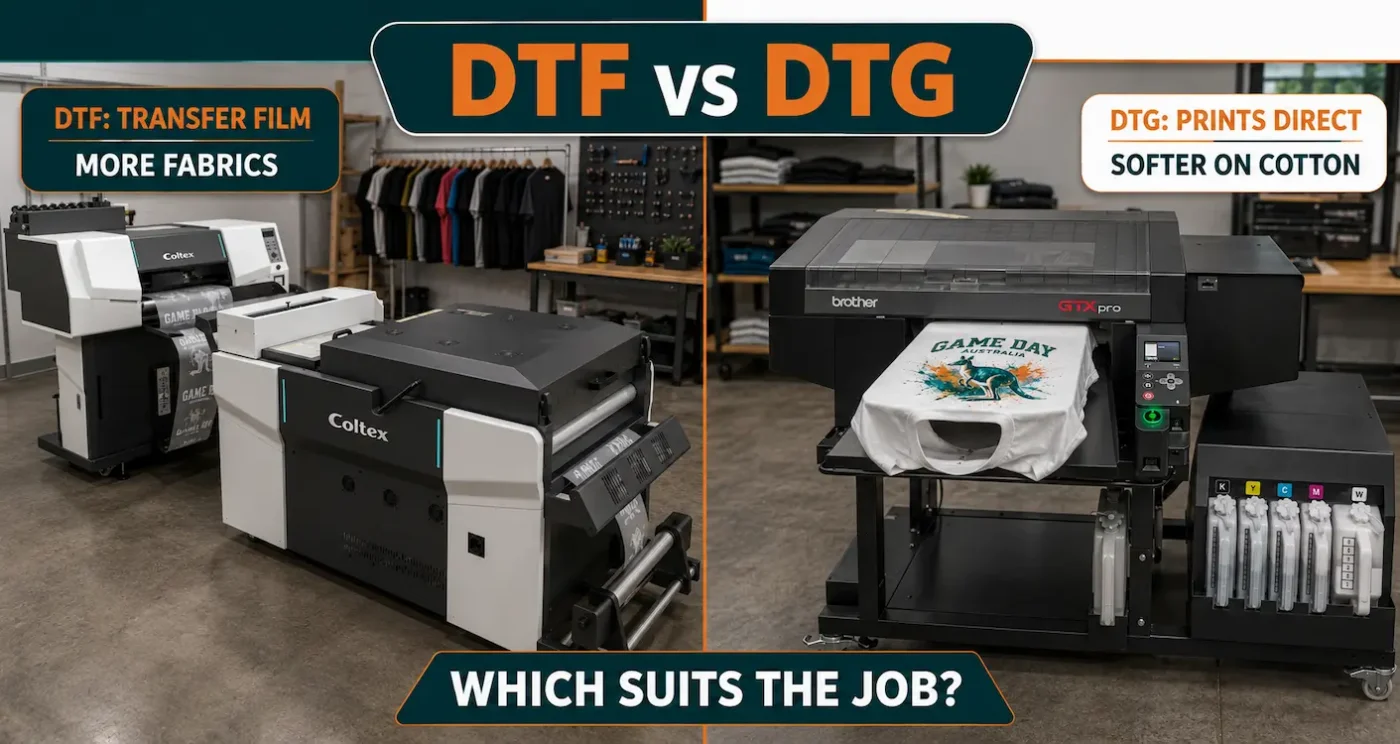
DTF prints artwork onto transfer film before heat application, while DTG prints ink directly onto the garment. Neither process wins every job. This practical comparison explains the differences in fabric compatibility, print feel, colour, durability, production workflow and cost so you can choose with realistic expectations.
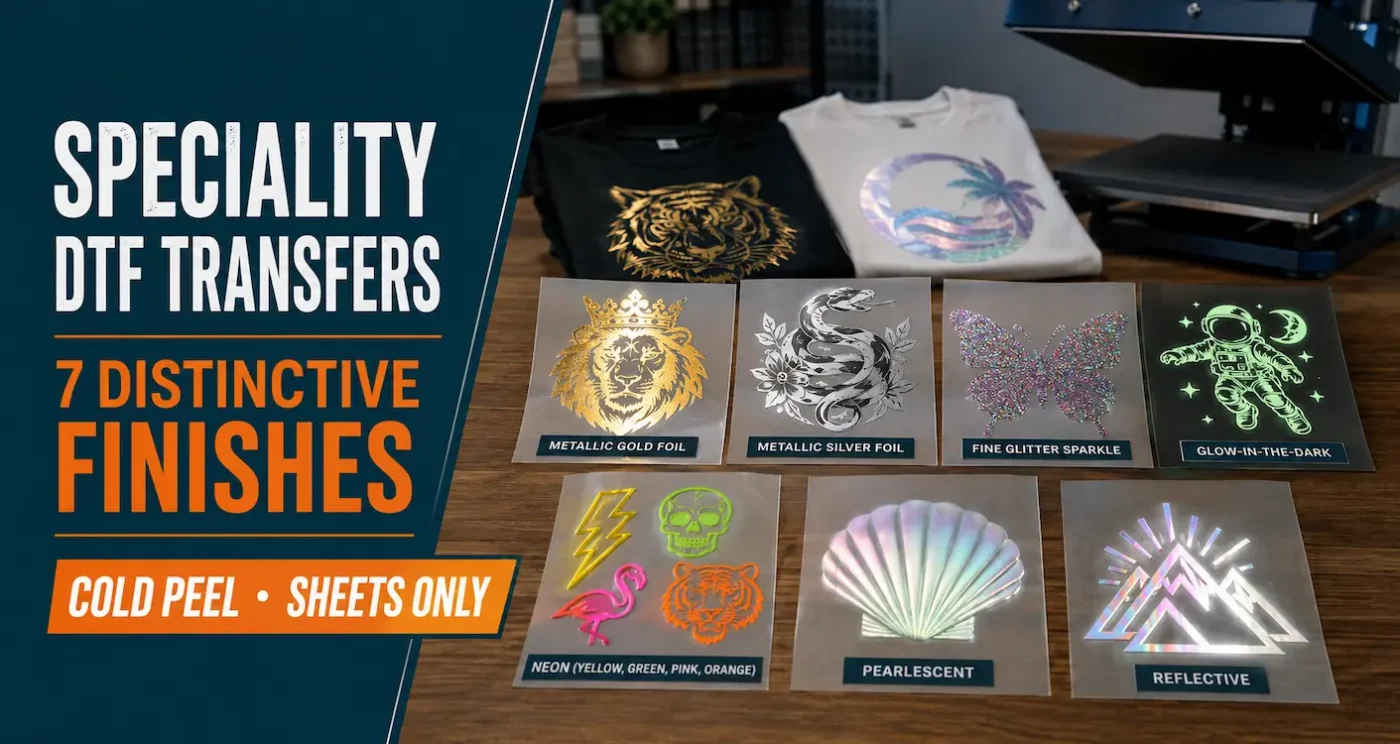
Give your artwork a finish standard DTF cannot reproduce. This guide compares our seven speciality DTF options: Gold Foil, Silver Foil, Glitter, Glow in the Dark, Neon, Pearl and Reflective. Every speciality transfer is supplied as a sheet, uses a cold-peel application and should be tested before production.
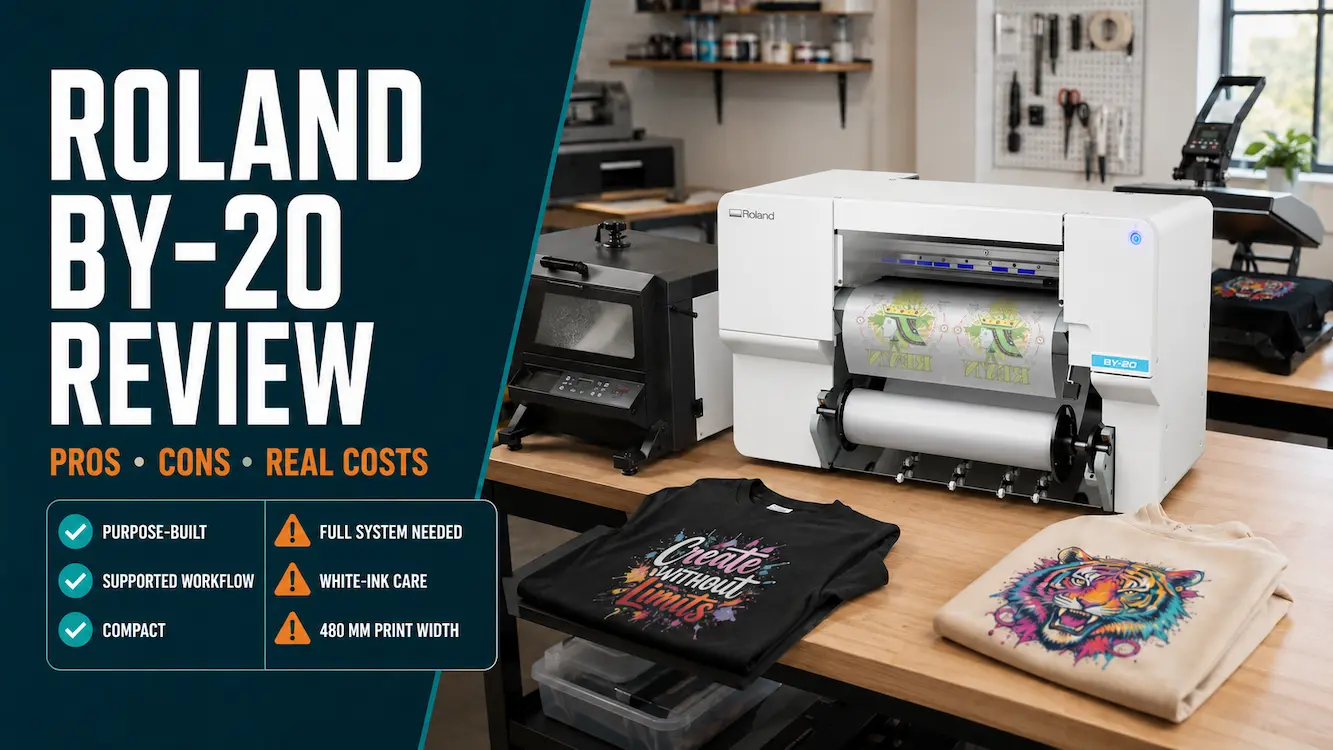
The Roland VersaSTUDIO BY-20 replaced the BN-20D as Roland DG Australia’s compact desktop DTF printer. It offers a purpose-built 20-inch system, integrated cutting, recognised software and local dealer support—but it still requires powder, curing, ventilation, maintenance and realistic production planning. This independent review examines the benefits and drawbacks before you buy.
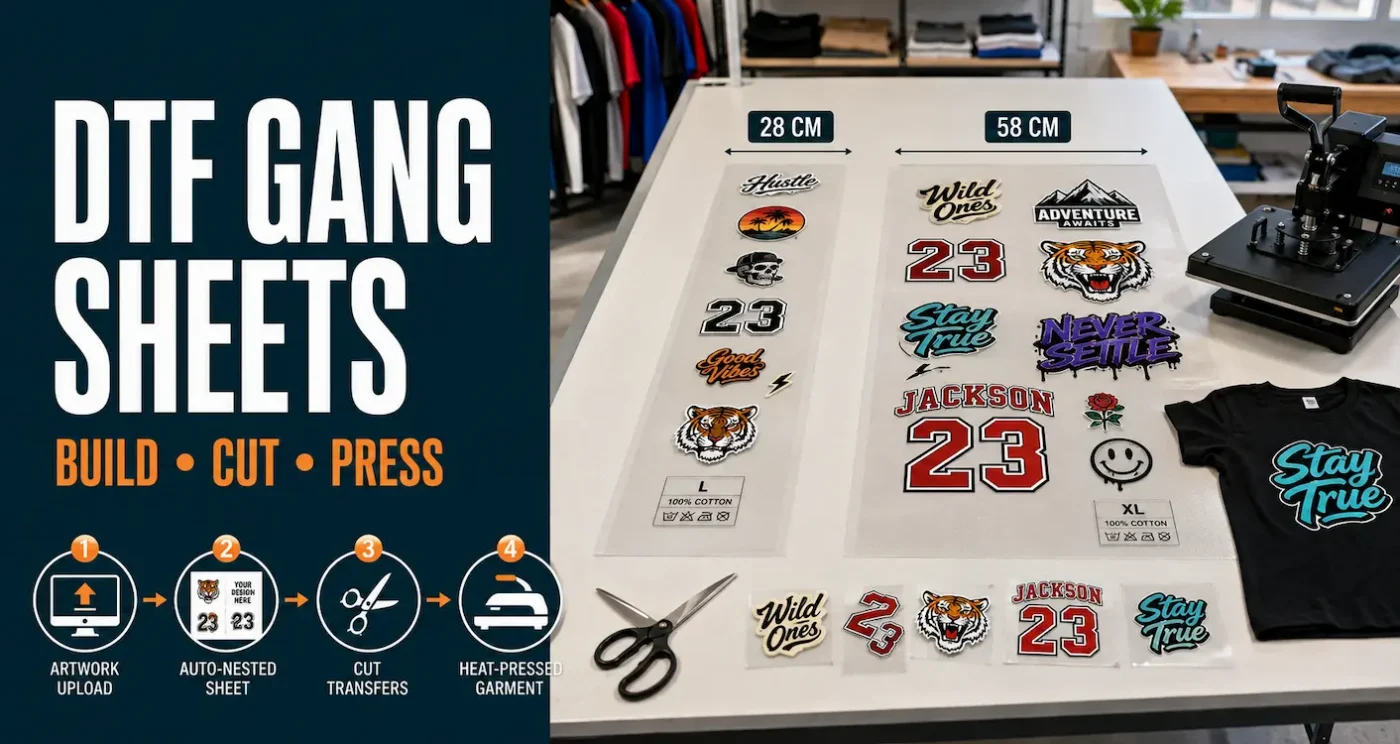
A well-planned gang sheet saves more than film. Learn how to choose 28 cm or 58 cm width, prepare artwork, use our online builder, check quantities and calculate transfer costs before pressing your garments.
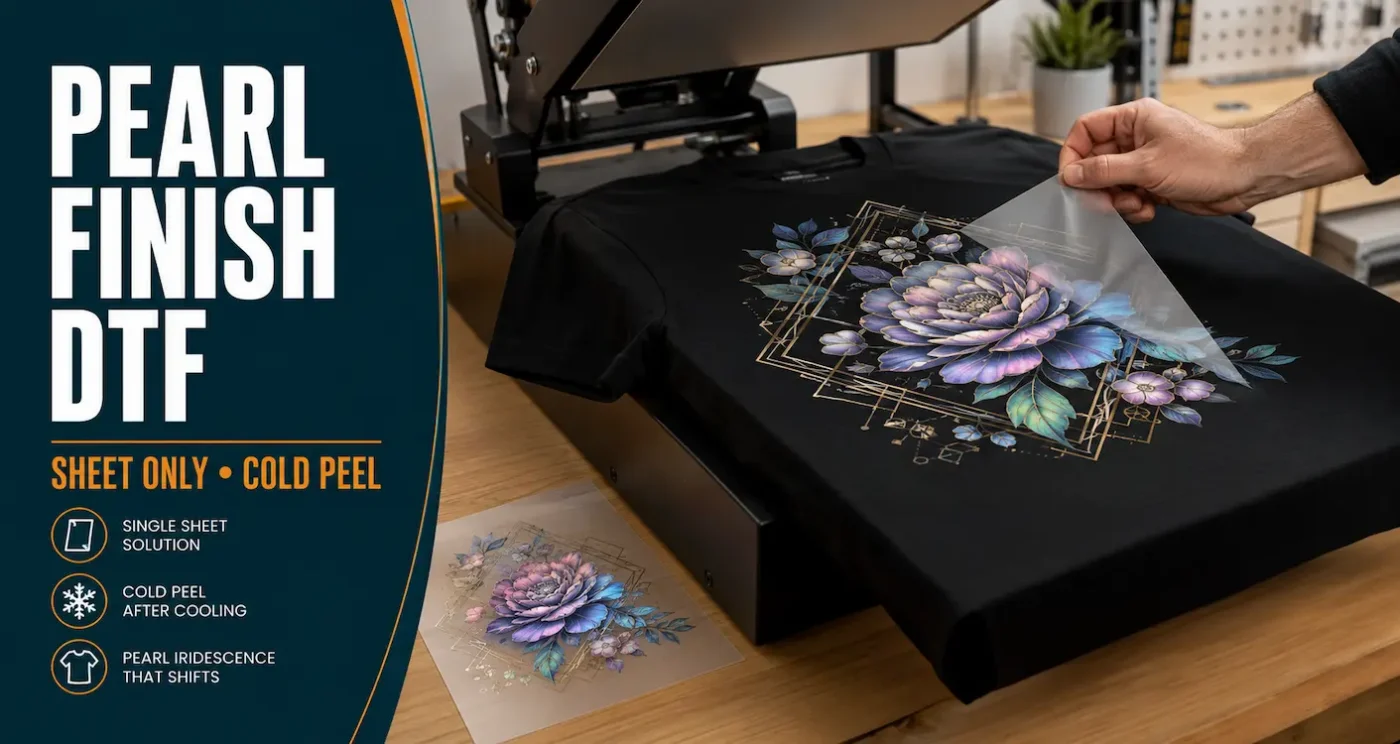
Pearl finish DTF transfers add an iridescent, chameleon-like sheen to full-colour artwork. They are specialty cold-peel transfers supplied as individual sheets, not gang sheets, and require more care during application than standard DTF. Learn how the effect works, how to prepare artwork and how to test before production.
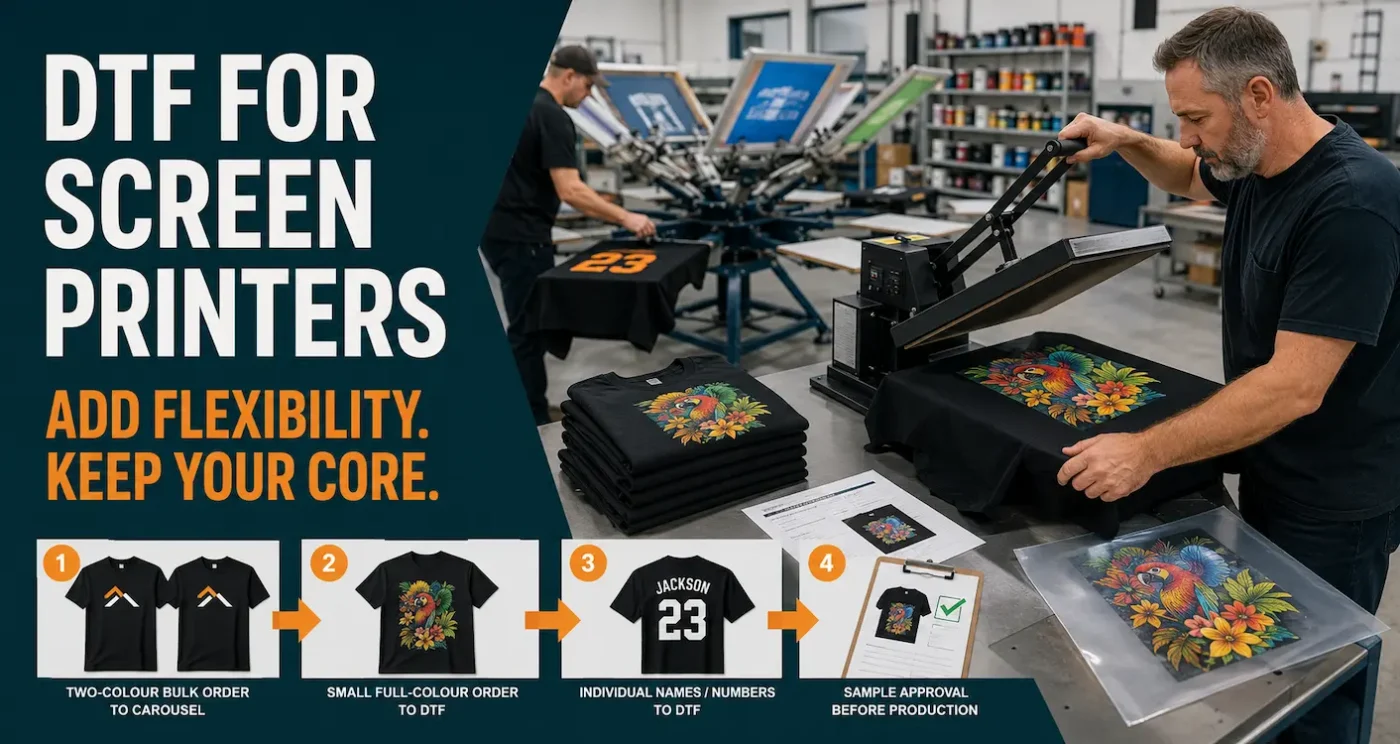
DTF does not need to replace screen printing. Ready-to-press transfers can help established printers accept short runs, full-colour artwork, samples, names and specialty jobs without adding screens or operating another print line. This practical guide explains where DTF fits, where screen printing remains stronger and how to introduce it successfully.
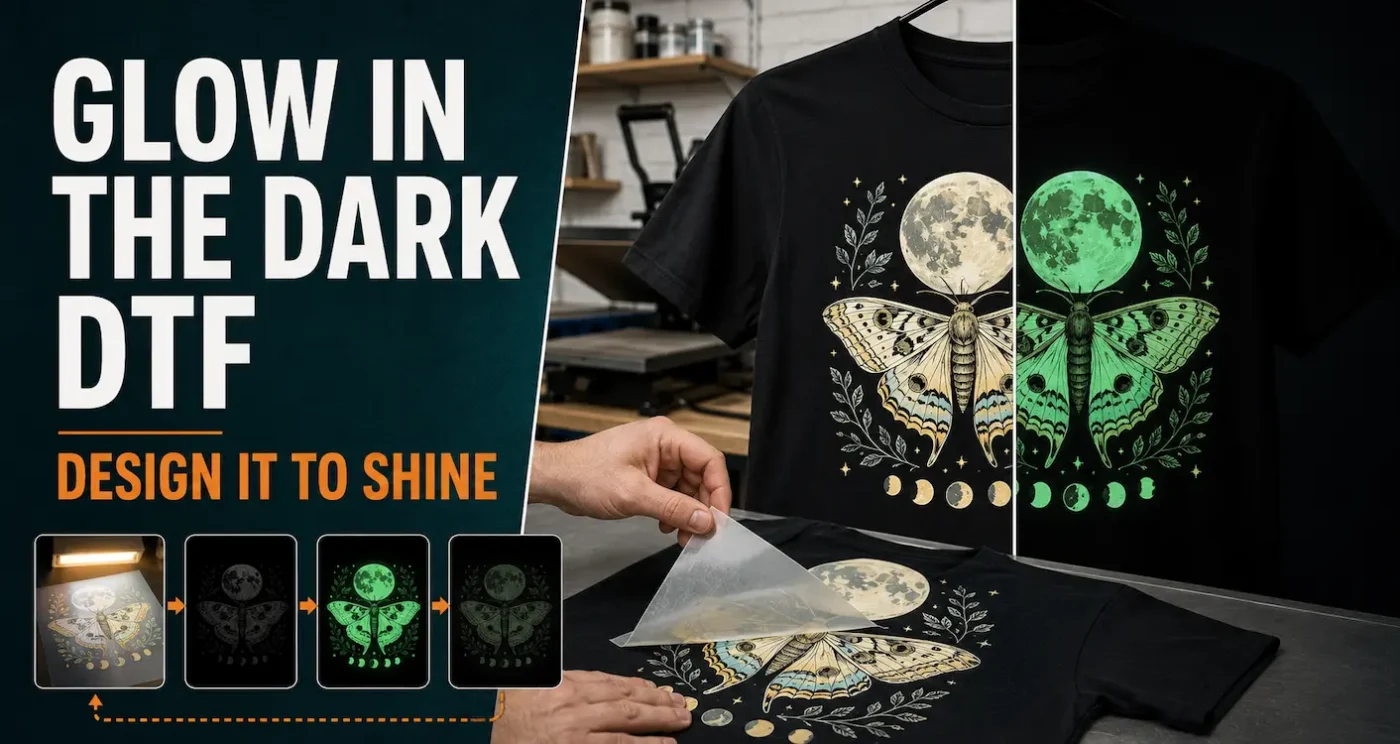
Glow in the Dark DTF transfers can display a colourful design in normal light and a greenish luminous effect after dark. Lighter artwork performs best, while black and dark navy reduce the glow. Files are printed as supplied, and these specialty cold-peel sheets require testing before production.
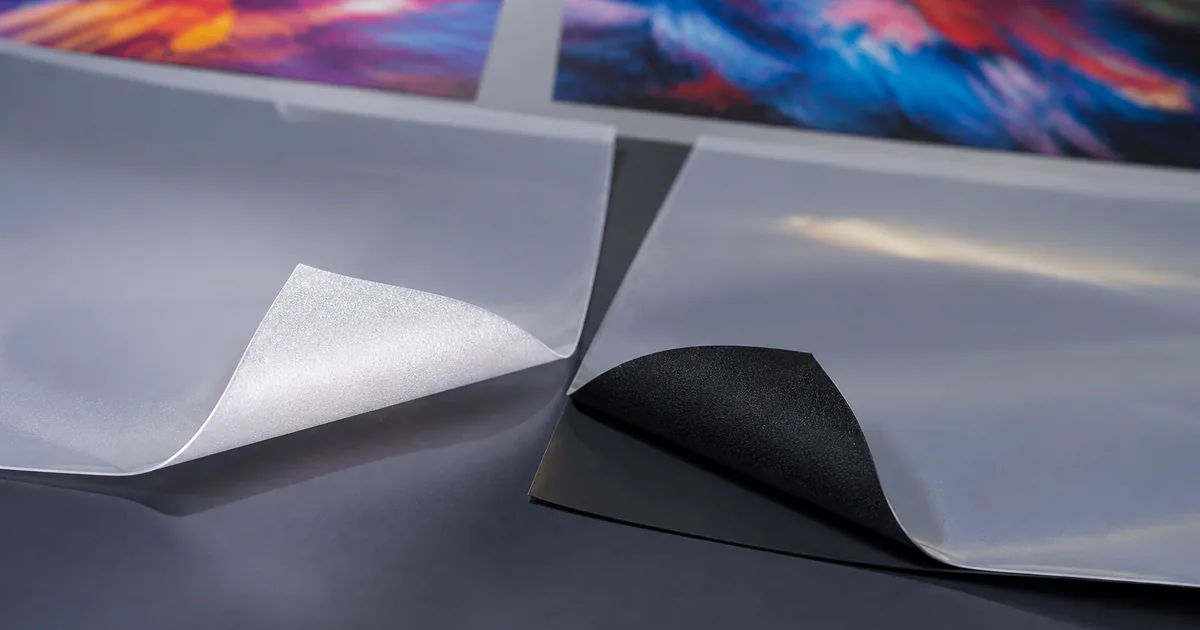
DTF transfer adhesive is the heat-activated layer that bonds a printed design to a suitable garment. Learn how it works, why DTF Transfers Australia now uses only white and black fine adhesive, and how moisture, fabric choice and pressing affect the finished result.
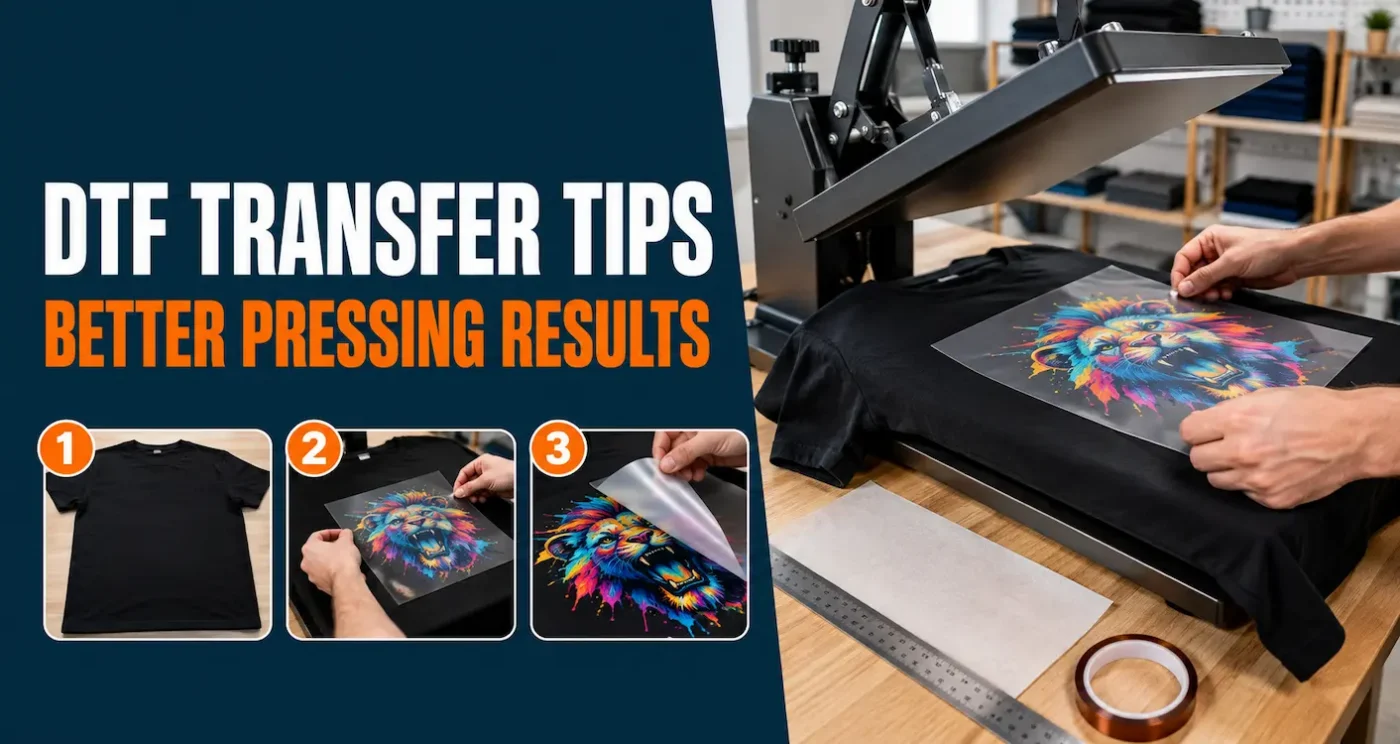
Press a dry shirt, at the right heat, for the right time, then peel the way that fabric requires. Cotton and most fabrics: 140°C, 8–10 seconds, firm, peel while hot, then 10 seconds under your own paper or Teflon. Polyester: 120°C, 30 seconds, firm, cold peel only, then 10 seconds at 120°C. A household iron is only for iron-on film. Test before you press a dozen.