
Film and Finishes
DTF Transfer Adhesive: White and Black Fine Powder
May
DTF Transfer Adhesive Explained: Why the Bonding Layer Matters
The colourful ink receives most of the attention in a DTF transfer, but the adhesive layer performs an equally important job. It creates the bond between the printed design and the garment when the transfer is applied with controlled heat and pressure.
This guide explains what DTF transfer adhesive is, where it fits into production and why DTF Transfers Australia now uses only white and black fine adhesive. It is written for customers ordering ready-to-press transfers rather than operators manufacturing transfers themselves.
TL;DR: DTF Adhesive at a Glance
- DTF adhesive is a heat-activated bonding layer added to the wet printed ink during transfer production.
- Customers receive the adhesive already applied and cured as part of a ready-to-press transfer.
- DTF Transfers Australia currently uses only white fine adhesive and black fine adhesive.
- We no longer use low-temperature adhesive because newer fine adhesive systems have closed the earlier performance gap for most suitable applications.
- Improved adhesive does not remove the need to test polyester and other heat-sensitive garments.
- We do not currently sell loose DTF adhesive to the public. If that changes, we will announce it through our website and customer updates.
- Even a well-made transfer can fail if the garment is damp or the application uses incorrect heat, time, pressure or peel timing.
What Is DTF Transfer Adhesive?
DTF transfer adhesive is a finely graded, heat-activated material used during Direct-to-Film transfer production. It is often called DTF powder, hot-melt powder or DTF glue, although it is not a liquid glue in the conventional sense.
The adhesive is applied while the printed ink on the transfer film is still receptive. Excess material is removed, leaving adhesive only where it is needed on the printed design. Production heat then prepares that adhesive layer so the transfer can be handled, packed and later applied to a garment.
When the customer heat-presses the finished transfer, the adhesive is activated again and bonds the ink layer to the fibres or surface of a suitable garment.
How Adhesive Becomes Part of a DTF Transfer
The following simplified workflow shows where adhesive sits between artwork and the finished garment.
- Print: The artwork is printed onto specialised DTF film using the required colour and white ink layers.
- Apply adhesive: Fine adhesive is distributed across the wet ink and the excess is removed.
- Prepare the transfer: Controlled production heat prepares the adhesive and ink layers for storage and handling.
- Heat-press the garment: The customer applies the ready-to-press transfer using the supplied time, temperature, pressure and peel instructions.
The production cure and the customer’s garment application are different stages. Customers ordering ready-to-press transfers do not need to apply or cure loose adhesive themselves.
Our Current White and Black Fine Adhesives
DTF Transfers Australia has simplified its normal production range to two fine adhesive options:
| Current adhesive | Production role | What customers need to know |
|---|---|---|
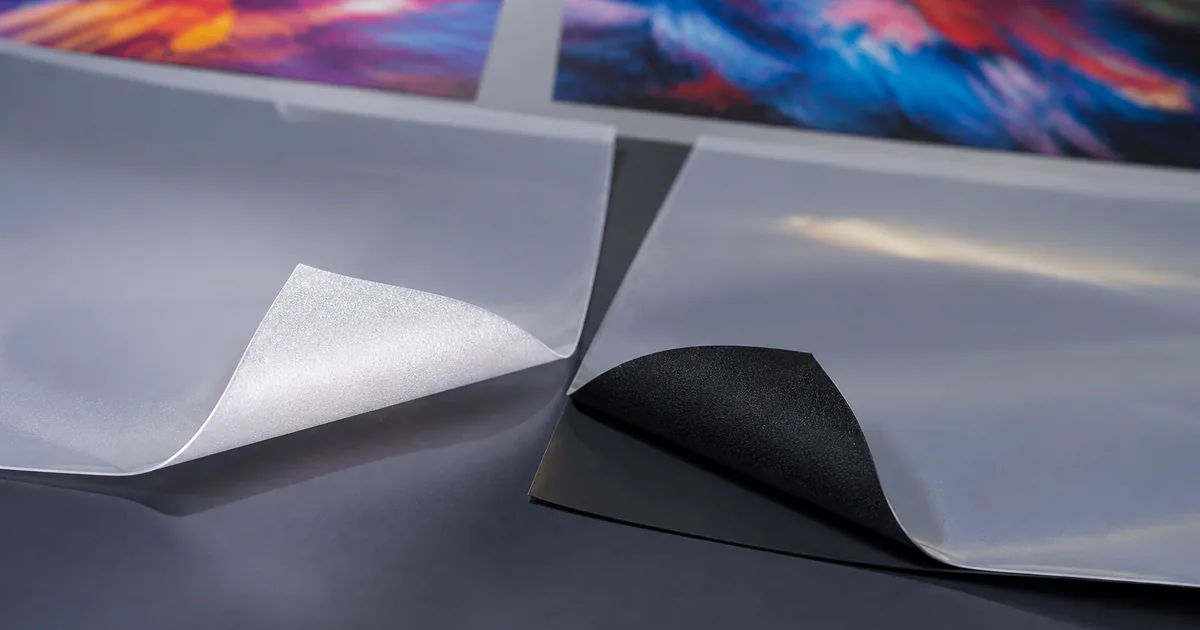
| White fine adhesive | Our standard light-coloured adhesive option for suitable transfer and garment combinations. | It is already applied to the finished transfer. Follow the fitting instructions supplied with the product. |
| Black fine adhesive | A dark adhesive option used where its colour better suits the transfer and intended garment. | It can help avoid a pale adhesive appearance at exposed edges on appropriate dark applications. Suitability still depends on the artwork and garment. |
“Fine” describes the grade used in our production system; it is not a promise that every artwork element can be printed at any size. Designs still need suitable line weight and printable detail. Review our DTF artwork requirements before ordering.
Why We No Longer Use Low-Temperature Adhesive
Low-temperature adhesive previously helped bridge a genuine gap when applying DTF transfers to polyester and some more difficult materials. It gave production another option when older general-purpose adhesive systems were not as capable at lower application temperatures.
Adhesive technology has continued to improve. Our current fine adhesive systems now cover the suitable applications for which we previously relied on a separate low-temperature product, so keeping that third adhesive is no longer necessary in our normal workflow.
This is an update to our own production process—not a universal statement that every DTF adhesive on the market performs identically.
See our current guide to DTF transfers on polyester for practical application advice.
Is DTF Adhesive Available to Buy from Us?
No. DTF Transfers Australia does not currently sell loose white or black adhesive to the public.
The adhesive is a production consumable used to manufacture our ready-to-press transfers. When you order a custom DTF transfer or DTF gang sheet, the correct adhesive layer is already applied and prepared before the order is dispatched or collected.
If we decide to sell adhesive separately in the future, we will update the website and let customers know. Until then, customers should not interpret this article or older search results as a current adhesive product listing.
How Adhesive Affects the Finished Transfer
Adhesive selection and production control can influence several parts of the finished result. It works as one component of a complete system alongside the artwork, ink, film, production process, heat press and garment.
| Quality factor | How adhesive is involved | Other important variables |
|---|---|---|
| Adhesion | The activated layer bonds the printed design to the garment. | Garment moisture, heat, time, pressure, platen contact and fabric suitability. |
| Edge definition | Controlled fine adhesive should remain with the printed areas rather than creating unnecessary residue. | Artwork edges, isolated pixels, ink deposit and production control. |
| Hand feel | The adhesive layer contributes to the thickness and flexibility of the print. | Size of the solid printed area, artwork construction, ink layers, garment and final press. |
| Wash performance | A correctly prepared and activated adhesive layer supports the bond during wear and washing. | Correct application, waiting before washing and appropriate garment care. |
It is misleading to judge durability from adhesive alone. A premium transfer can still be under-pressed, and a transfer applied correctly can still be unsuitable for a particular coated or heat-sensitive garment.
Fabric Compatibility Still Requires Testing
DTF transfers are suitable for many cotton, polyester and blended garments, but “many” does not mean “all”. Fabric fibre is only one part of the decision. Dyes, water-resistant coatings, stretch treatments, surface texture, seams and heat sensitivity can change the result.
- Cotton: generally offers a straightforward surface, but moisture and lint still need attention.
- Polyester: often needs lower heat and careful testing for dye migration, shine and shrinkage.
- Blends: performance varies with fibre ratio, dye and garment finish.
- Hoodies and thick garments: seams, pockets and fleece can prevent even pressure.
- Coated and water-resistant fabrics: coatings may resist bonding or react to heat; never assume compatibility.
- Leather and imitation leather: composition and finishes vary widely, and heat can permanently damage the surface. Test first rather than treating “leather” as a generally approved DTF material.
Our guides to T-shirt fabrics and DTF transfers on hoodies and sweatshirts cover these decisions in more detail.
Why Moisture Can Undermine Adhesion
Moisture can enter the process through a damp garment, humid storage or adhesive that has absorbed water before transfer production. In our production experience, adhesive needs to remain dry and be processed correctly; wet or compromised adhesive should not be treated as normal stock.
Customers also need to remove moisture from the garment:
- Place the garment flat on the heat press.
- Pre-press it before positioning the transfer.
- Open the press and check for visible steam.
- If steam appears, let it escape and press again until the garment is dry.
Applying a transfer immediately after visible steam can trap moisture in the print area and contribute to lifting, bubbling or inconsistent bonding.
Adhesive Still Needs the Correct Heat-Press Application
The adhesive layer is prepared during production, but it must be activated correctly when the transfer is fitted. The essential variables are heat, time, pressure and peel timing.
| Material | Temperature | Initial press | Pressure | Peel | Final press |
|---|---|---|---|---|---|
| Cotton and most suitable fabrics | 160°C | 8 seconds | Firm | Immediately while hot | 10 seconds at the same temperature |
| Polyester | 120°C | 30 seconds | Firm | Cold peel only — cool completely before peeling | 10 seconds at 120°C |
These are current starting settings for Insta-Peel transfers supplied by DTF Transfers Australia. Heat-press calibration, pressure and garments vary, so test a spare garment or sample. Specialty transfers may use different instructions.
If part of an Insta-Peel design lifts, stop peeling, lay the film back down and repress before trying again. Read the full DTF fitting instructions before starting production.
Troubleshooting DTF Adhesion Problems
| Symptom | Possible causes | What to check |
|---|---|---|
| Design lifts with the carrier film | Garment moisture, insufficient heat/time/pressure, uneven contact or incorrect peel timing | Stop, replace the film and repress. Confirm the garment is dry and the press is heating and closing evenly. |
| One edge or corner does not bond | Seam, pocket or platen pressure difference | Move bulky areas off the platen or use a pressing pillow to isolate the print area. |
| Loose adhesive appears outside the design | Contamination, damaged transfer or production fault | Do not press questionable loose material onto the garment. Photograph the transfer and contact us before application. |
| Print separates after washing | Incomplete application, unsuitable fabric, washing too soon or harsh care | Review the initial and final press, wait 24–48 hours before washing and follow the care instructions. |
| Colour migrates through a polyester print | Garment dye reacting to heat | Use the polyester starting settings and test the exact garment. Adhesive cannot guarantee complete dye blocking. |
| Garment becomes shiny or marked | Fabric sensitivity, excessive heat or pressure | Stop production and test a spare garment. Heat marks are not necessarily an adhesive fault or reversible. |
Change one variable at a time and record the result. Our broader guide to DTF transfer tips and troubleshooting provides a complete pressing checklist.
What About Liquid Adhesive or “Powderless” DTF?
Liquid-adhesive and powderless DTF systems are being promoted as an alternative to conventional adhesive powder. We have trialled liquid-adhesive output, but our current production finding is that it is not yet a proven replacement for our normal workflow. It can be more difficult to fit and work with.
We will continue testing developing technology, but we will not describe it as production-ready simply because a manufacturer or campaign promotes it. Our current ready-to-press transfers continue to use the fine adhesive process described in this article.
Frequently Asked Questions
Does DTF Transfers Australia sell adhesive powder?
No. We do not currently sell loose DTF adhesive to the public. White and black fine adhesives are production consumables used to manufacture our ready-to-press transfers. We will notify customers if separate adhesive sales become available.
Which DTF adhesives do you currently use?
We now use two fine adhesive options: white and black. The appropriate option is selected to suit the transfer and intended application.
Do you still use low-temperature DTF adhesive?
No. Improvements in our current fine adhesive systems have closed the earlier performance gap, so a separate low-temperature adhesive is no longer needed in our normal production process.
Is black DTF adhesive only for black garments?
It is a dark adhesive option that can suit appropriate dark applications, but garment colour is not the only consideration. Artwork, exposed edges, fabric and the production setup also matter. We select the adhesive as part of producing the transfer.
Does improved adhesive prevent dye migration on polyester?
No adhesive can guarantee zero dye migration on every polyester garment. Use lower polyester starting settings and test the exact style and colour before production.
Do customers need to cure the adhesive?
No. On a ready-to-press transfer, the adhesive has already been applied and prepared during production. Customers only need to fit the transfer using the supplied heat-press and peel instructions.
Why is my DTF transfer not sticking?
The transfer may be under-pressed, the garment may contain moisture, the platen may have uneven temperature or pressure, a seam may be obstructing contact, or the wrong peel method may have been used. Stop if the design lifts, replace the film and repress before continuing.
Can I use DTF transfers on any fabric?
No. DTF works with many cotton, polyester and blended garments, but dyes, coatings, texture and heat sensitivity vary. Test unfamiliar fabrics and garments before committing to a production run.
Are powderless DTF transfers replacing adhesive powder?
Not in our current production. We have trialled liquid-adhesive output and do not yet consider it a production-ready replacement for our established fine adhesive workflow.
Order the Finished Transfer, Not the Loose Adhesive
Customers do not need to select, apply or cure loose adhesive to use our ready-to-press transfers. We manage that production stage so you can focus on preparing the garment, applying the transfer correctly and completing the final press.
Browse the DTF transfer shop, build a gang sheet or check the current fitting guide before pressing.
