
Ordering and Gang Sheets
Direct-to-Film T-Shirt Printing: Artwork, Fabrics and Pressing
Jan
Originally posted: 19 January 2023. Last updated: 5 October 2026.
Quick summary
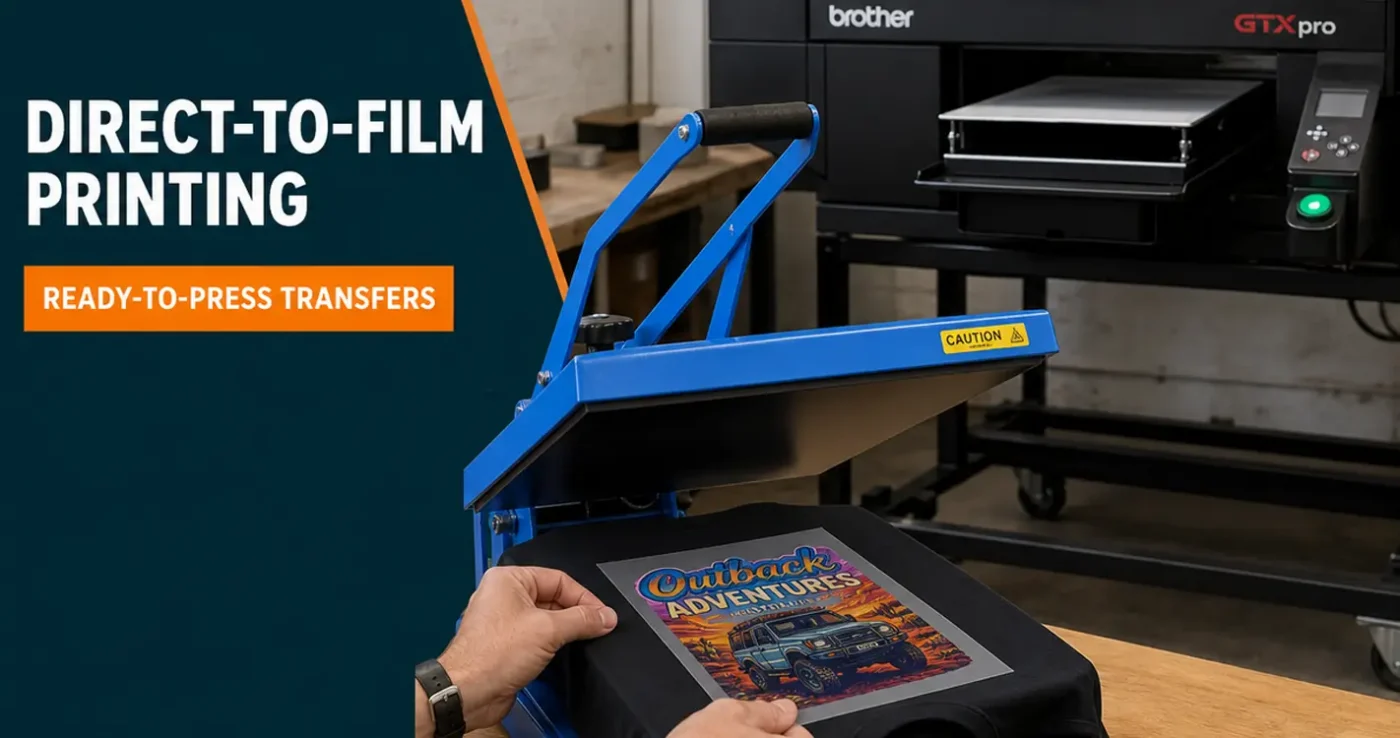
Direct-to-film printing puts your design on a sheet of film. You then heat-press that film onto a shirt. We print the film in Coorparoo. You press it, unless you are buying a finished garment from T Shirts Australia. Cotton and most fabrics peel hot at 140°C for 8–10 seconds. Polyester is a cold peel at 120°C for 30 seconds. A household iron is only for iron-on transfers.
On this page
- Quick summary
- What direct-to-film means
- Which fabrics
- Artwork and what to order
- How to press
- Problems you can see
- FAQ
What direct-to-film means
DTF means the picture is printed onto film, not straight onto the shirt. Colour goes down, then a white layer, then adhesive. Heat and pressure move that stack onto the garment. The clear carrier comes off. The design stays.
You do not need a DTF printer to sell printed shirts. Upload the art, order a gang sheet or a cut sheet, and press the film we send. DTF Transfers Australia sells the transfers. Blank shirts and garments we print for you are at T Shirts Australia.
The film on our standard sheets is Hot Insta Peel. How that replaced older hot, cold, and hybrid films is in Insta-Peel DTF film.
Which fabrics
Cotton, polyester, and many blends take DTF, including dark colours, because the transfer carries its own white. T-shirts, hoodies, and a lot of workwear are normal jobs. Caps and bags only work if the press can put even pressure on the print area. A flat platen on a curved cap panel will not.
Polyester needs a cooler press and a cold peel. Heat can mark the cloth, and dye can crawl into a light print. Test the exact colour. DTF on polyester is the page to read before a sports-shirt run.
Compared with other methods: vinyl is better for a few solid colours you can cut. Sublimation is better for light polyester when you want no hand feel. Screen printing is better for a big run of a simple design. DTF is the practical choice for full colour, short runs, and names that change every shirt.
Artwork and what to order
Use PNG, JPG, WebP or PDF. Prefer a transparent PNG at about 300 DPI at the finished print size. Crop it. Keep fine lines at least about 1 mm. The upload limit is 254 MB. Do not mirror the file.
Order a cut sheet for one size. Order a gang sheet when you have several designs or several copies. Gangs are 28 cm or 58 cm wide, at $21.95 or $30.95 a metre, GST included. Build the sheet in the browser. We print that film.
Orders in by 12:00 noon Brisbane time on a weekday are in that day’s standard handling, typically 3–5 business days. Same/Next Day handling is coming soon, aimed at November–December 2026, and cannot be ordered before then. Express postage does not shorten the printing time.
How to press
You need a heat press, a lint roller, and your own parchment, baking paper, or Teflon. We do not supply a finishing sheet. The bench list is T-shirt printing equipment.
- Lint-roll. Pre-press until the shirt does not steam. See why pre-pressing matters.
- Lay the film adhesive-side down. Keep seams out of the platen.
- Cotton and most fabrics: 140°C, 8–10 seconds, firm pressure. Peel immediately while hot.
- Polyester: 120°C, 30 seconds, firm pressure. Cold peel only, after it has cooled.
- Press again for 10 seconds under a clean cover sheet. On polyester, keep that second press at 120°C.
A household iron is only for products labelled iron-on. A Cricut EasyPress is fine when the platen fully covers the design. Treat it as a small heat press for standard film and Hot Insta Peel. If the design is larger than the platen, use a press that covers it in one press. Always test.
The clear carrier does not stay on the shirt. You peel it off. If you leave it on, you have not finished the job.
Problems you can see
- The design lifts with the film. Stop pulling. Lay it back, press again, and check that the shirt was dry.
- Edges lift after washing. Check the second press, seams under the print, and whether it was washed the same day. Wait 24–48 hours, then wash inside out.
- A pale print on polyester changes colour. That is dye migration. Use the polyester settings and test. Do not “fix” it with more heat.
- A shiny rectangle sits around the art. The cover sheet was dirty, or the platen was hotter or longer than the fabric wanted.
FAQ
Do I need a DTF printer to make custom T-shirts?
No. Order ready-to-press transfers, then press them onto shirts you supply. A printer is a later decision, once you know the volume is there. We do not sell printers or powder.
Can DTF transfers be used on black T-shirts?
Yes. The transfer includes a white layer, so a dark shirt does not show through the design. You still need a clean file, a dry shirt, and the right press settings. Black fabric also shows lint, so roll it first.
Does the clear film stay on the T-shirt?
No. The clear carrier is peeled off after the press. On cotton and most fabrics, peel Hot Insta Peel while it is hot. On polyester, wait until it is cold. The print that stays behind is the design and the adhesive.
Is DTF suitable for photographs?
Yes, if the file is large enough. Build it at about 300 DPI at the size it will be printed. Stretching a small photo makes a soft print. We cannot sharpen detail that was not in the file.
Are all DTF transfers peeled while hot?
No. Our standard Hot Insta Peel film is peeled hot on cotton and most fabrics, and cold on polyester. Specialty finishes are cold peel. Iron-on transfers follow their own instructions, not the Insta-Peel peel.
