
Pressing and Care
T-Shirt Fabric Types: Choosing the Right Fabric for DTF Printing
Jan
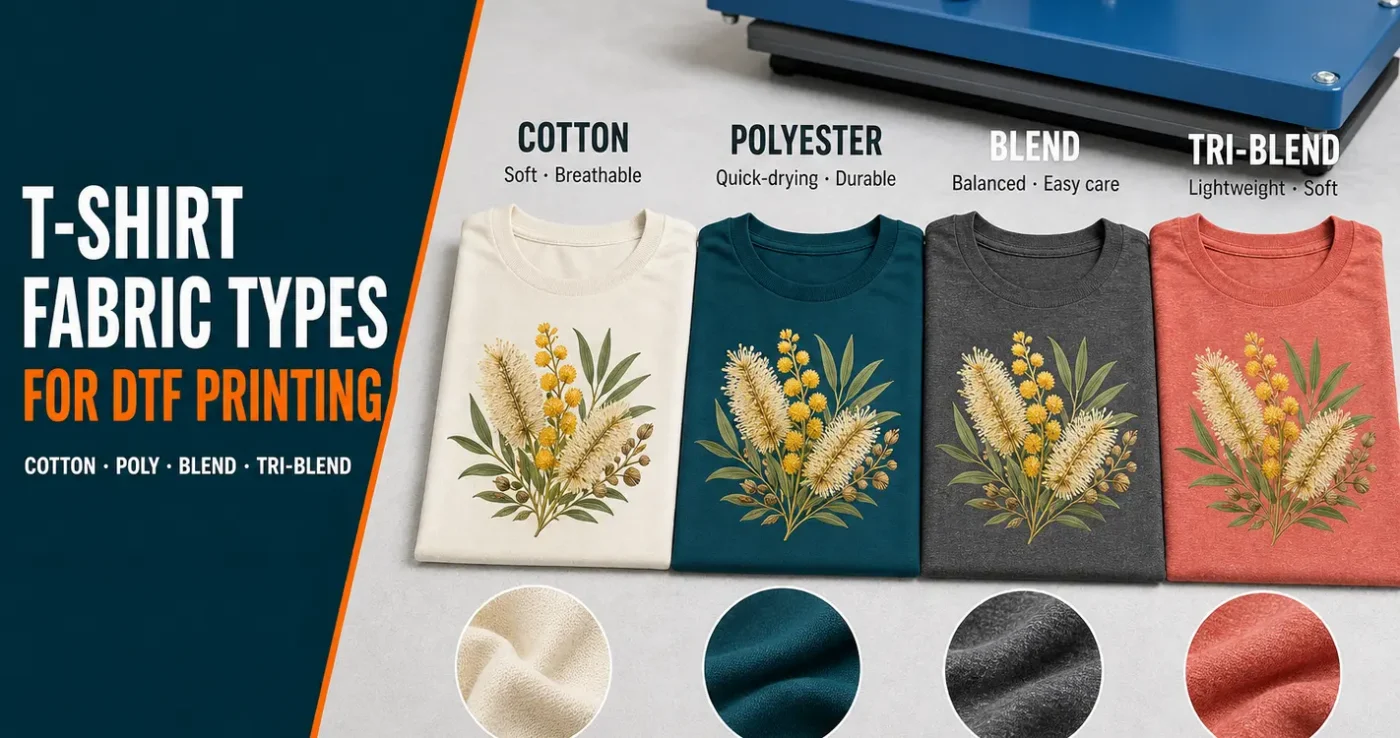
Cotton, polyester and blended fabrics are the most common choices for T-shirts. Each offers a different balance of softness, drying time, stretch and structure. The right choice depends on who will wear the shirt and how it will be used.
For a printed T-shirt, you also need to consider how the garment responds to heat and pressure. DTF transfers can work well on cotton, polyester and many blends, but a smooth cotton tee and a lightweight sports shirt may need different application settings.
This guide explains the main T-shirt fabric types, the terms you will see in garment descriptions and what to check before ordering or printing your shirts.
TL;DR — choosing a T-shirt fabric
- Cotton: a popular choice for comfortable everyday tees and a practical starting point for DTF printing.
- Polyester: commonly used for sportswear and quick-drying garments. Test for heat marks and dye migration before printing.
- Cotton/polyester blends: combine characteristics of both fibres; check the actual blend percentages.
- Tri-blends and soft fashion fabrics: often have a lighter, more flowing feel, but need careful heat-press testing.
- GSM measures fabric weight: it does not tell you the quality, softness or fit by itself.
- Check the specific garment: fibre content, colour, texture, coatings and stretch all affect printing.
Understanding T-shirt fabric descriptions
A garment description may mention cotton, jersey, combed yarn and GSM in the same sentence. These describe different parts of the fabric:
- Fibre content: what the fabric is made from, such as cotton or polyester.
- Blend: the combination and proportion of fibres, such as 80% cotton and 20% polyester.
- Yarn: the fibres prepared into a strand, which is then knitted or woven into fabric.
- Construction: how the yarn is formed into fabric. Jersey is a common T-shirt knit.
- GSM: the weight of one square metre of fabric, measured in grams.
Fit and finishing matter as well. Two shirts labelled 100% cotton can have very different softness, thickness and shape. A sample tells you more than the fibre label alone.
T-shirt fabrics compared
| Fabric | Typical feel and use | What to check before DTF printing |
|---|---|---|
| Cotton | Comfortable and absorbent; popular for everyday and retail tees. | Surface smoothness, moisture, shrinkage and even pressure. |
| Polyester | Often quick-drying; widely used for sport and workwear. | Dye migration, heat marks, coatings and garment heat tolerance. |
| Cotton/polyester blend | A mix of cotton comfort and polyester’s drying and shape-retention characteristics. | Blend percentages, dyes and the response of the finished garment. |
| Tri-blend | Often soft and lightweight, with a relaxed drape. | Stretch, distortion, press marks and how a solid print affects the feel. |
| Viscose, modal or lyocell blend | Often smooth and soft, with a flowing fit. | Heat sensitivity, pressure marks and care requirements. |
| Nylon or high-stretch fabric | Used in fitted activewear and other performance garments. | Transfer compatibility, coatings, heat tolerance and stretch after printing. |
These are general characteristics. The garment’s construction and finish can change how it feels, wears and prints.
Cotton T-shirts
Cotton is a familiar choice for casual T-shirts. It absorbs moisture and can feel comfortable against the skin. It is available in everything from light summer tees to heavy, structured shirts.
For DTF printing, a smooth cotton jersey provides a useful starting point. The fabric gives the transfer a relatively even surface, and white ink in the transfer allows designs to show on both light and dark garments.
Cotton can hold moisture, wrinkle and shrink. Pre-press as directed to remove moisture before applying the transfer, and assess shrinkage during sample washing. A pre-shrunk label does not mean that no further shrinkage is possible.
What do combed and ring-spun cotton mean?
Combing removes shorter fibres and helps align the remaining fibres before spinning. Ring spinning is a method of making the yarn. They are separate processes, so a shirt can be both combed and ring-spun.
These terms can help explain a smoother yarn and softer feel, but they do not guarantee garment quality. Look at the finished fabric, stitching, fit and wash performance too.
What about organic cotton?
Organic cotton is still cotton. The term relates to how the crop is grown under the relevant organic standard, rather than a separate fibre with different pressing instructions.
Check the supplier’s certification if organic sourcing matters to your purchase. For printing, assess the garment as you would any other cotton tee: its dye, texture, finish and construction still matter.
Polyester T-shirts
Polyester is a synthetic fibre commonly used in sportswear and uniforms. It absorbs less water into the fibre than cotton and is often used to make quick-drying fabrics.
Not every polyester shirt feels the same. Some have a smooth, silky surface; others are textured or made to feel closer to cotton. Moisture-wicking performance also depends on the yarn, fabric construction and any treatment applied.
DTF transfers can be applied to suitable polyester garments, but testing is essential. Heat can cause garment dye to move into the print, changing its colour. This is called dye migration, and it may appear after the garment has cooled.
Polyester can also develop shine or visible press marks. Use the polyester guidance for your transfer, rather than copying settings from a cotton job. Our article on DTF transfers on polyester explains the main application considerations.
Cotton/polyester blends
Cotton/polyester blends combine fibres to achieve a particular feel and performance. The cotton contributes absorbency, while polyester can help with drying time, wrinkle resistance and shape retention.
The percentages matter. An 80% cotton tee may feel quite different from an 80% polyester tee, even though both are described as a cotton/polyester blend.
Blends can be a practical choice for uniforms, event shirts and everyday wear. However, adding cotton does not eliminate the possibility of polyester dye migration or heat marking. Test the actual garment rather than selecting settings from the blend name alone.
Tri-blend T-shirts
A tri-blend contains three fibres. In T-shirts, this commonly means cotton, polyester and rayon or viscose, although the exact composition varies.
Many tri-blend tees are designed to feel soft and light, with fabric that hangs loosely rather than holding a firm shape. This makes them popular for casual clothing ranges.
That lightness affects printing choices. A large solid DTF design can feel more noticeable on a thin tee and change the way it hangs. Open areas within the artwork can help retain more of the garment’s original feel.
Check for stretching, distortion and press marks on a sample. Do not assume that a process tested on a heavy cotton shirt will suit a lightweight tri-blend.
Viscose, rayon, modal and lyocell
These are related types of manufactured cellulose fibre. The cellulose comes from a plant source and is processed into fibres. They are often used in blends to add softness and drape.
- Rayon: a broad term used for regenerated cellulose fibres.
- Viscose: commonly refers to rayon made using the viscose process.
- Modal: a type of regenerated cellulose fibre often used in soft clothing blends.
- Lyocell: a cellulose fibre made using a different production process.
TENCEL™ is a brand of lyocell and modal fibres, rather than the generic name for all fabrics containing them.
For DTF printing, test the complete garment. Lightweight fabrics in this group can mark or distort under heat and pressure, and their care requirements may differ from a standard cotton tee.
What does “bamboo” mean on a T-shirt?
Many garments sold as bamboo use viscose or rayon made from bamboo-derived cellulose. That is different from fabric made directly from mechanically extracted bamboo fibre. The FTC’s explanation of bamboo textiles describes this material distinction.
Read the actual composition rather than relying on the marketing name. A bamboo-derived viscose blend may feel soft, but the word bamboo alone does not tell you its heat tolerance, durability or environmental impact.
Linen, hemp and merino wool
These fibres also appear in T-shirts and casual clothing, often in blends.
- Linen: made from flax, often with a distinctive texture and a tendency to wrinkle. Check that the print can make even contact with the surface.
- Hemp: used on its own or blended with fibres such as cotton. Feel and texture vary, so inspect the actual garment rather than assuming it will be coarse or smooth.
- Merino wool: used in outdoor and specialist clothing. Heat and pressure can affect the surface or shape, so confirm decoration suitability with the garment and transfer suppliers.
These are not automatic substitutes for cotton in an established printing process. Check the garment’s heat limits and test before committing to a production order.
Nylon and stretch fabrics
Nylon is used in activewear, outerwear and accessories. Some nylon garments are heat-sensitive or have coatings that make adhesion difficult. Do not assume a standard DTF transfer will bond reliably without checking compatibility.
Elastane, also called spandex, is added to fabrics to provide stretch and recovery. LYCRA® is a brand name, not a generic term for every elastane fibre.
A garment with elastane needs to be assessed both flat and stretched as it would be worn. The print must cope with that movement, and pressing must not damage the fabric’s recovery. A design that looks good on the bench may behave differently on a fitted top.
Fabric weight, knit and texture
What does GSM tell you?
GSM means grams per square metre. It measures fabric weight per area, not the weight of the whole shirt.
For example, a 220 GSM fabric weighs more per square metre than a 150 GSM fabric. That does not automatically make it softer, more durable or better quality. The lighter fabric may be exactly what a customer wants for a loose summer tee.
Use GSM alongside the fabric composition, construction and sample feel. Terms such as lightweight, midweight and heavyweight can vary between brands.
Jersey, rib and textured fabrics
Jersey is a common knit for T-shirts and can be made from different fibres. Rib has visible raised lines and can stretch considerably. Slub fabrics have deliberate variations in the yarn that create an uneven texture.
A smooth print area is generally easier to work with than deep ribbing, open mesh or a strongly textured surface. Small printed details may not make consistent contact across an uneven fabric.
Colours, finishes and coatings
The same garment style can use different fibre blends for different colours. A marle or heather option, for example, may contain polyester even when the solid colours are cotton. Check the specification for the colour you are ordering.
Marle describes a mixed-colour appearance; it does not identify a particular fibre. That appearance will remain visible through any open spaces in your design.
Water-resistant coatings, softening treatments and other finishes can affect adhesion. Previously sublimated polyester also needs care because its dye may migrate when reheated.
If a garment has a protective or high-visibility function, confirm its suitability for decoration with the supplier before printing.
Which fabrics are best for DTF printing?
For a straightforward everyday printed tee, smooth cotton or a tested cotton-rich blend is a practical starting point. Polyester can also work well when the transfer and pressing process suit the garment.
The best choice still depends on the product you want to make. A cotton tee selected only for easy printing may not meet the needs of a customer wanting lightweight sportswear.
Use the current DTF fitting instructions for the transfer you ordered. Standard Insta-Peel, cold-peel speciality and iron-on transfers have different application requirements. Do not use one set of settings for every fabric and transfer type.
Choose fabric for the person wearing it
- Everyday wear: compare cotton and cotton-rich blends for comfort, fit and preferred weight.
- Sport and activewear: look at drying performance, movement and how the print affects stretch and comfort.
- Uniforms: consider repeat availability, size range and how the garment copes with its intended wash routine.
- Events: choose a dependable style with the required colours, sizes and delivery availability.
- A clothing label: select the fit and fabric feel that suit your designs, then test the printed samples.
Once you have chosen the garment, measure the intended print area and check the design size on a sample. The same print width can look quite different on a fitted tee and an oversized style.
Check environmental claims carefully
A fibre name alone does not tell you the environmental impact of a finished T-shirt. If sourcing matters to your purchase, ask for evidence about the specific garment and what any certification covers.
If you sell printed garments, describe verified features accurately. A claim about organic cotton or recycled content should not be expanded into an unsupported claim about the entire finished product. The ACCC’s environmental-claims guidance explains why claims need to be clear, accurate and supported.
Care for the garment and the print
Follow both the garment label and the transfer care instructions. If they conflict, check with the suppliers before selling or laundering the printed garment.
For our standard DTF care guidance, wait 24–48 hours before the first wash, turn the garment inside out and use a cool or cold gentle wash. Avoid bleach, air dry, avoid tumble drying and do not iron directly over the design.
See our DTF care instructions for the current guidance. Washing affects the complete garment, so assess shrinkage, fit and print performance together.
Before printing a batch
- Check the exact garment. Read the composition and care information for the chosen style and colour.
- Inspect the print area. Look for coatings, texture, seams or thick layers that may affect adhesion or pressure.
- Choose the correct instructions. Match them to the transfer and fabric, and confirm the press is working consistently.
- Prepare and print a sample. Remove lint, pre-press as directed and complete the full application, including any finishing press.
- Assess the result. Check adhesion, colour changes, marks, distortion and stretch where relevant.
- Wash-test after the recommended wait. Record the results and the settings used before proceeding.
Retest when the garment, colour, transfer or supplier changes. For more on preparing the fabric, read why moisture and pre-pressing matter for DTF transfers.
Frequently asked questions
Is cotton or polyester better for T-shirts?
Cotton is a popular choice for comfortable everyday wear. Polyester is often chosen for quick-drying sportswear and uniforms. The better option depends on the intended use, fabric construction and fit.
Does a higher GSM mean a better T-shirt?
No. GSM measures fabric weight per square metre. Quality also depends on the yarn, construction, finishing and sewing, while suitability depends on what the wearer wants.
Is jersey a type of cotton?
No. Jersey describes a knit construction. A jersey T-shirt can be made from cotton, polyester or a blend of fibres.
Can DTF transfers be used on 100% polyester?
Yes, on suitable garments with a compatible transfer and tested application settings. Check for dye migration, heat marks and adhesion before printing a batch.
Can the different colours of one T-shirt style have different fabrics?
Yes. Marle and heather colours may have a different blend from solid colours. Check each colour’s specification and test it before printing.
Will a DTF print change how the fabric feels?
Yes. A DTF design sits on the fabric and adds a printed layer. Large solid designs can feel more noticeable, especially on light fabrics. Open areas in the artwork let more of the original fabric remain uncovered.
Choose the garment first, then plan the print
Start with the fit, comfort and purpose of the T-shirt. Check the fabric and print area, then test the transfer on the garment you intend to use.
DTF Transfers Australia supplies custom transfers ready for you to apply. Order a custom DTF gang sheet or browse our transfer range to find the format and finish for your project.
